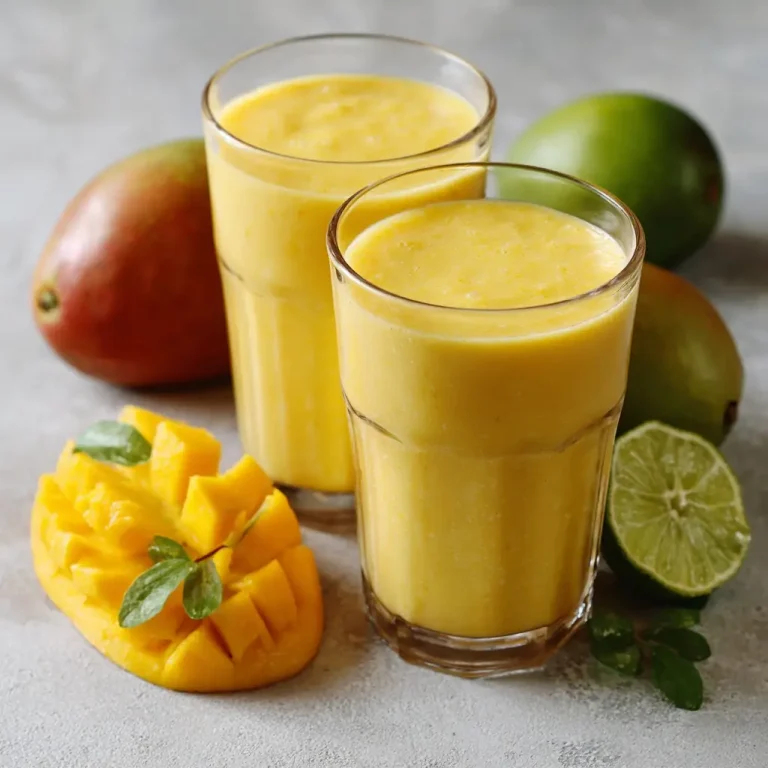
There’s a particular kind of morning chaos that only a good smoothie can fix. You’re running late, the coffee hasn’t kicked in, and the last thing you want is a sink full of dishes before 8 a.m. This mango smoothie solves that problem in the time it takes to brush your teeth.
I’ve made this recipe more times than I can count, tweaking ratios until it landed on that perfect balance of thick, creamy, and naturally sweet without a drop of added sugar. Ripe mango does the heavy lifting here, and everything else simply supports it.
What makes this version stand apart isn’t a secret ingredient or a fancy blender technique. It’s restraint. Too many mango smoothie recipes overcomplicate things with syrups, powders, and add-ins that mute the fruit’s natural flavor. This one lets the mango shine.
Whether you’re fueling a workout, packing a quick breakfast, or just craving something cold and tropical, this smoothie delivers real nutrition without sacrificing taste. Five minutes, one blender, zero regrets.
Ingredients You’ll Need
Great smoothies aren’t built on long ingredient lists — they’re built on the right ones, used in the right proportions, and this one proves exactly that.
One of the things I love about this recipe is that it uses simple pantry ingredients. You probably already have most of them in your kitchen.
Base Ingredients
- 2 cups ripe mango chunks (fresh or frozen)
- 1 cup plain Greek yogurt
- 1/2 cup milk of choice (dairy or plant-based)
- 1 tablespoon honey or maple syrup (optional, to taste)
- 1/2 cup ice cubes
- 1/2 teaspoon vanilla extract
Optional Add-ins
- 1 tablespoon chia seeds
- 1/2 banana, for extra creaminess
- 1/4 teaspoon ground turmeric
- 1 tablespoon flaxseed meal
- 1/2 cup fresh orange juice (in place of milk)
- A pinch of cardamom for a floral twist
Step-by-Step Instructions
Prep Your Mango
If using fresh mango, peel and slice it away from the pit, then cube it into rough chunks. Frozen mango works just as well and actually gives the smoothie a thicker, colder texture without diluting the flavor. If you’re using fresh mango and want that same frosty consistency, freeze the chunks for at least an hour beforehand, or simply add a few extra ice cubes at the blending stage to compensate for the lost chill factor.
Layer the Ingredients
Add the milk and yogurt to your blender jar first, followed by the mango chunks, then the ice. Layering liquids at the bottom helps the blades catch everything evenly, preventing that frustrating moment where the blender struggles against a dry clump of fruit. If you’re including add-ins like chia seeds or banana, toss them in with the mango so they get pulled into the vortex early rather than sitting untouched at the top.
Blend Until Smooth
Secure the lid and blend on high for 45 to 60 seconds, stopping once to scrape down the sides if needed. You’re looking for a completely smooth, pourable consistency with no visible ice chunks or fruit fibers. If the mixture looks too thick to move on its own, add a splash more milk, one tablespoon at a time, and blend again briefly until it loosens up.
Taste and Adjust
Give the smoothie a quick taste before serving. Ripe mangoes vary wildly in sweetness, so this step matters more than people assume. If it needs more sweetness, stir in a touch more honey and blend for five more seconds. If it feels too thick, thin it with more liquid. Trust your palate over the recipe here — every mango behaves a little differently.
Serve Immediately
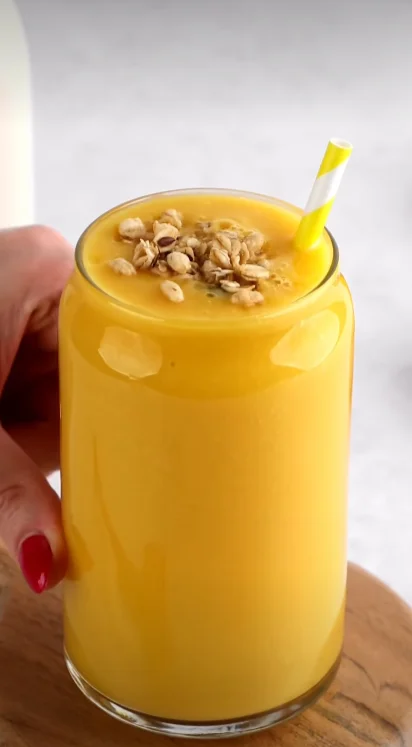
Pour into a chilled glass right away, since this smoothie is at its creamy, cold best within minutes of blending. Add a garnish if you like, such as a few extra mango cubes on top or a light dusting of chia seeds. This isn’t a make-ahead drink in the traditional sense, so timing your blend to your sip is part of what makes it taste so fresh.
Cook Time
Total: 5 minutes
Prep: 5 minutes
Bake: Not applicable
Servings
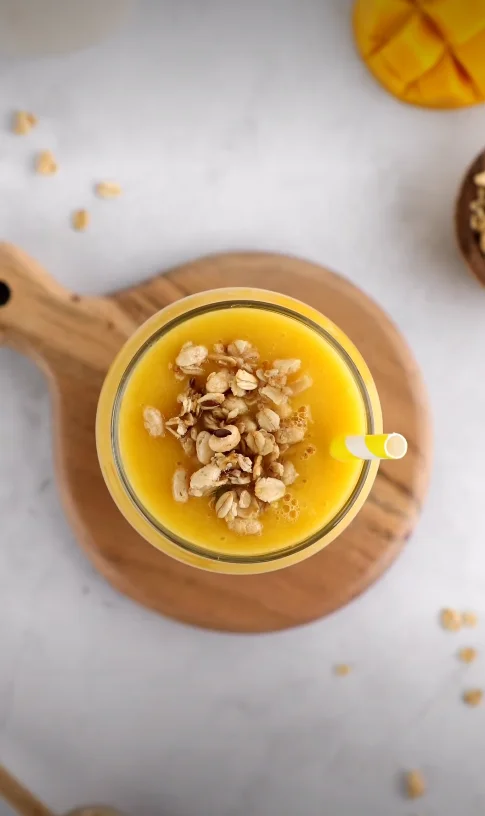
This recipe makes approximately 2 generous servings, or 3 smaller portions if you’re serving it alongside breakfast rather than as the meal itself. Each glass comes out thick enough to eat with a spoon if you prefer that style, or slightly thinner if you add a touch more milk during blending.
If you’re prepping for a family or a group workout session, this recipe scales up easily. Simply double or triple the ingredients and blend in batches if your blender jar can’t handle the full volume at once, since overcrowding tends to produce uneven blending.
For single-serving mornings, halve the recipe exactly and adjust ice slightly downward, since smaller batches can turn overly icy if the ratio isn’t adjusted. Makes approximately 16 ounces total at the standard ingredient list.
Common Mistakes in This Recipe
The most frequent mistake is using underripe mango, which results in a tart, thin smoothie that lacks the natural sweetness this recipe depends on. Mango should give slightly under gentle pressure and smell fragrant near the stem before it’s blended.
Another common issue is adding too much liquid too soon. Once a smoothie turns watery, there’s no real way to thicken it back up without simply adding more fruit, which throws off the flavor balance you were originally aiming for.
Skipping the ice or using too little of it leads to a lukewarm, overly soft texture that lacks the refreshing quality people expect from a smoothie. This is especially noticeable when fresh, unfrozen mango is used without any frozen substitute in the mix.
Finally, over-blending past the point of smoothness can actually warm the mixture from friction, softening its texture and making it less satisfying to drink cold.
Solutions to Common Mistakes
To avoid the ripeness issue, always choose mango that yields gently to pressure and has a sweet aroma. If your mango is underripe, let it sit at room temperature for a day or two, or add a touch more honey to compensate for the missing sweetness.
For liquid control, always add milk gradually rather than all at once. Start with half the amount listed, blend, and check the consistency before adding more. It’s far easier to thin a smoothie than to thicken one after the fact.
To fix texture problems, freeze your mango chunks in advance or keep a bag of frozen mango on hand specifically for this recipe. This guarantees a thick, cold result every single time, regardless of how ripe or soft the fresh fruit happens to be.
Lastly, blend only until smooth and stop immediately, using short pulses near the end rather than one long continuous blend to keep the temperature and texture in check.
Nutritional Information (approx. per serving)
- Calories: 210 kcal
- Protein: 9g
- Carbohydrates: 38g
- Fiber: 3g
- Sugar: 32g (naturally occurring)
- Fat: 3g
- Calcium: 15% DV
- Vitamin C: 70% DV
Mango is genuinely one of the more nutrient-dense fruits available, offering a substantial dose of vitamin C along with vitamin A, both of which support immune function and skin health. Pairing it with Greek yogurt adds a meaningful protein boost, which helps this smoothie feel more like a real meal component than just a sugary drink.
The natural fiber in mango supports digestion and helps moderate how quickly the fruit’s sugars are absorbed, which matters for maintaining steady energy rather than a quick spike and crash. This is part of why the smoothie feels sustaining rather than fleeting.
Greek yogurt also contributes probiotics that support gut health, and calcium that benefits bone strength, making this drink useful beyond simple refreshment.
For anyone watching added sugar intake, this recipe’s reliance on ripe fruit for sweetness rather than syrups or juices makes it a genuinely better-for-you option compared to many store-bought smoothie alternatives.
Storage Instructions
This smoothie is genuinely best enjoyed fresh, within minutes of blending, since mango-based smoothies tend to separate and lose their vibrant texture once they sit. That said, life doesn’t always allow for perfect timing, so here’s what to do if you need to store it.
If you must store leftovers, pour the smoothie into an airtight container or a mason jar with minimal air space, and refrigerate immediately. It will keep reasonably well for up to 24 hours, though expect some separation and a slightly less vibrant texture upon opening.
Before drinking stored smoothie, give it a vigorous shake or a quick re-blend to restore its original consistency. Adding a few fresh ice cubes at this stage can also help revive the cold, thick texture it had originally.
Freezing leftover smoothie in an ice cube tray is another smart option, letting you pop out portions later for quick re-blending into a fresh batch whenever you need one.
Suggestions
For an extra protein boost, consider adding a scoop of vanilla or unflavored protein powder to the blender, which works especially well if you’re using this smoothie as a post-workout recovery drink rather than a simple snack.
If you want to turn this into a more substantial breakfast, serve it in a bowl instead of a glass, topped with granola, sliced fresh mango, coconut flakes, and a drizzle of honey for a smoothie bowl presentation that feels considerably more indulgent.
Swapping the dairy yogurt and milk for coconut yogurt and coconut milk creates a fully dairy-free version with a subtle tropical undertone that pairs beautifully with the mango’s natural sweetness.
For a green boost without altering the flavor much, blend in a handful of fresh spinach. It disappears completely into the mango’s color and taste while adding extra vitamins and minerals to the final glass.
Seasonal Relevance
Mango season generally peaks between late spring and midsummer, depending on your region, which makes this smoothie an especially rewarding choice during those warmer months when fresh mangoes are at their sweetest and most affordable.
During colder months, frozen mango becomes the more practical and often equally flavorful option, since mangoes are typically frozen at peak ripeness, preserving much of their natural sweetness and nutrient content year-round.
This smoothie also works beautifully as a refreshing counterpoint during hot summer days, offering hydration alongside its nutritional benefits, making it a popular choice for post-beach afternoons or backyard gatherings.
Beyond seasonality, mango’s tropical character makes this smoothie a favorite for anyone craving a taste of warmth during winter, offering a small, colorful escape from grey, cold days regardless of the calendar.
Final Words
This mango smoothie earns its place in a regular rotation not because it’s complicated or clever, but because it consistently delivers on flavor, nutrition, and speed all at once. Few recipes manage that balance so effortlessly.
What stands out most, after making this countless times, is how forgiving it is. Swap the milk, adjust the sweetness, add a boost of greens or protein, and it still comes together beautifully every single time.
For anyone building a healthier morning routine or simply looking for a reliable way to use ripe mangoes before they turn, this recipe deserves a permanent spot in your rotation.
Keep good mangoes on hand, keep your blender within reach, and this five-minute ritual will quickly become one of the easiest, most satisfying habits in your kitchen.
Frequently Asked Questions
Can I make this smoothie without a high-powered blender?
Yes, a standard blender works fine as long as the mango is soft or frozen and cut into small pieces. Just blend a bit longer and scrape down the sides occasionally for a smooth, even consistency throughout.
Is this smoothie suitable for kids?
Absolutely. It’s naturally sweet, nutrient-rich, and free of added sugars if you skip the honey. Consider straining it slightly for very young children who may prefer a smoother texture without any fibrous bits.
Can I use canned mango pulp instead of fresh or frozen mango?
Yes, canned mango pulp works well in a pinch. Reduce the added sweetener since pulp is often already sweetened, and adjust the liquid slightly since pulp tends to be thicker than fresh mango chunks.
5-Minute Healthy Mango Smoothie
2
servings5
minutes210
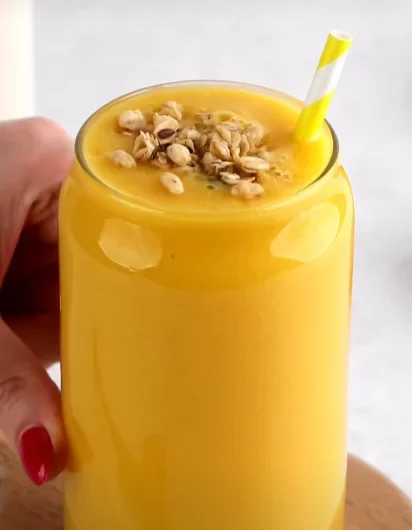
kcalA creamy, naturally sweet mango smoothie ready in just 5 minutes. Packed with vitamin C, protein, and probiotics, it’s the perfect quick breakfast or post-workout refresher using simple, wholesome ingredients you already have on hand.
Ingredients
Base Ingredients:
2 cups ripe mango chunks (fresh or frozen)
1 cup plain Greek yogurt
1/2 cup milk of choice (dairy or plant-based)
1 tablespoon honey or maple syrup (optional, to taste)
1/2 cup ice cubes
1/2 teaspoon vanilla extract
Optional Add-ins:
1 tablespoon chia seeds
1/2 banana, for extra creaminess
1/4 teaspoon ground turmeric
1 tablespoon flaxseed meal
1/2 cup fresh orange juice (in place of milk)
A pinch of cardamom for a floral twist
Directions
- Peel and cube fresh mango, or use frozen mango chunks directly.
- Add milk and yogurt to the blender jar first.
- Add mango chunks, followed by ice cubes.
- Include any optional add-ins (chia seeds, banana, etc.) with the mango.
- Secure the lid and blend on high for 45–60 seconds.
- Stop once to scrape down the sides if needed.
- Add more milk, one tablespoon at a time, if the mixture is too thick.
- Taste and adjust sweetness with honey if needed.
- Pour into a chilled glass and serve immediately.
- Garnish with mango cubes or a dusting of chia seeds, if desired.
Recipe Video
Notes
- Use ripe mango for natural sweetness; avoid underripe fruit for best flavor.
- Add liquid gradually to prevent a watery consistency.
- Freeze mango chunks in advance for a thicker, colder texture.
- Best enjoyed fresh; store leftovers in an airtight container for up to 24 hours.
- Shake or re-blend before drinking if storing.
- Swap dairy for coconut yogurt and coconut milk for a dairy-free version.