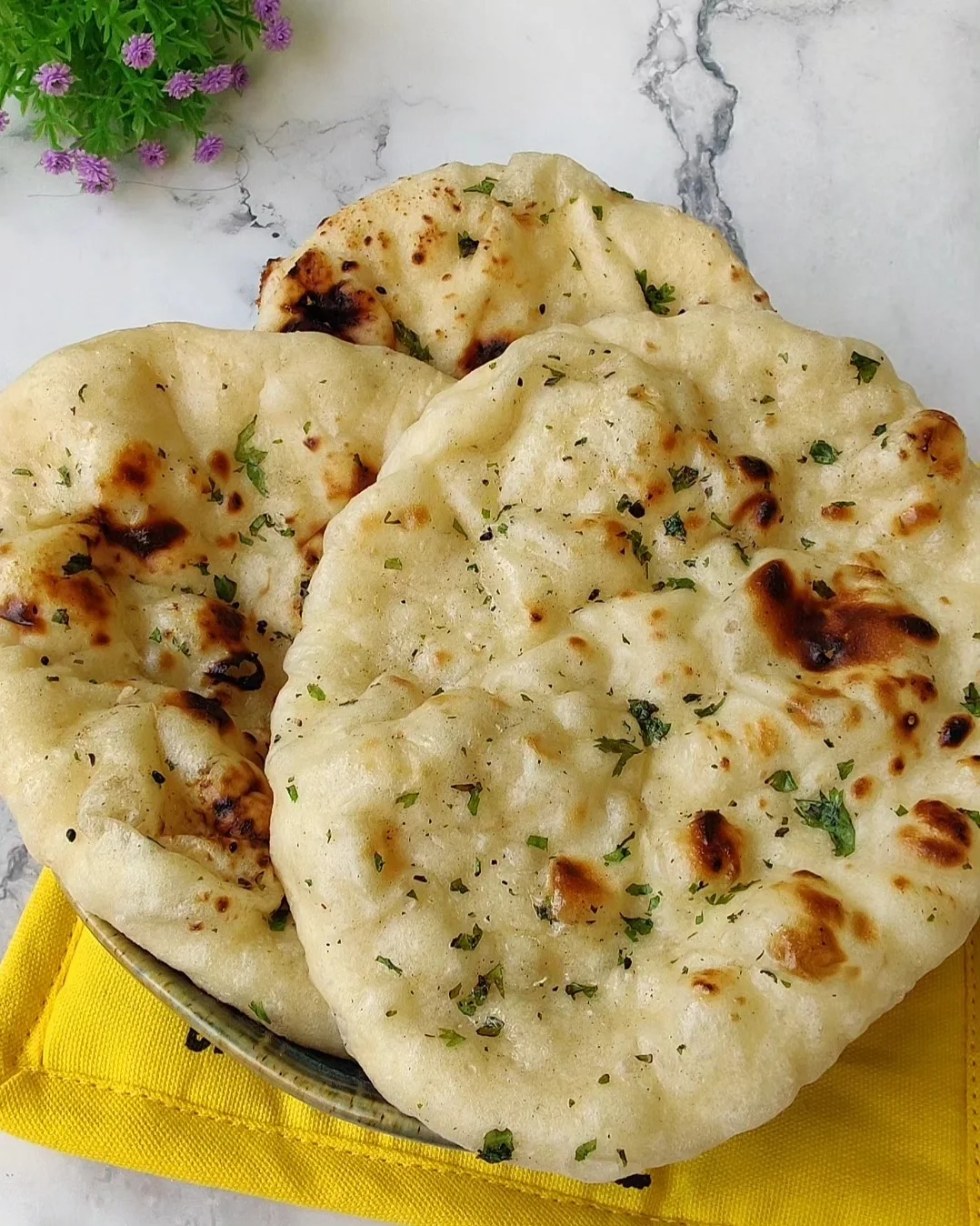
There is a particular kind of magic in watching a flat disc of dough puff up into a pillowy, blistered bread right in front of you, with nothing but a hot skillet and a few minutes. Naan has a reputation for needing a tandoor, but the truth is far simpler, and far more accessible for a home kitchen.
Yogurt is the quiet hero of this recipe. It tenderizes the gluten and adds a subtle tang, giving the naan its signature soft, chewy pull without any special flour or equipment. A ripping hot cast iron skillet mimics the intense, dry heat of a clay oven closely enough that the difference disappears once the bread is on your plate.
This version is built for real kitchens and real schedules. No tandoor, no pizza stone, no overnight starter. Just a bowl, a skillet, and a stovetop you already use every day. The dough comes together quickly and forgives small measuring mistakes, which makes it an ideal recipe for beginners and experienced cooks alike.
Brushed with garlic butter the moment it leaves the pan, this naan is meant to be torn, dipped, and eaten warm. Whether it’s sitting beside a bowl of dal, scooping up curry, or wrapped around grilled kebabs, this bread turns a simple meal into something worth slowing down for.
Ingredients You’ll Need
Good naan starts with ingredients you can trust, and the beauty of this recipe is that it doesn’t ask you to hunt down anything unusual. Everything here earns its place, working together to build that soft, blistered, restaurant-style bread you’re picturing right now.
One of the things I love about this recipe is that it uses simple pantry ingredients. You probably already have most of them in your kitchen.
Base Ingredients
- 2 cups all-purpose flour
- 1 teaspoon instant yeast
- 1 teaspoon sugar
- 1/2 teaspoon salt
- 1/2 teaspoon baking powder
- 1/2 cup plain yogurt
- 1/2 cup warm water (adjust as needed)
- 2 tablespoons vegetable oil
Optional Add-ins
- 2 cloves garlic, minced (for garlic naan)
- 2 tablespoons chopped fresh cilantro
- 1/4 teaspoon nigella seeds (kalonji)
- 1/4 teaspoon carom seeds (ajwain)
- 3 tablespoons melted butter, for brushing
- 1/4 teaspoon chili flakes
Step-by-Step Instructions

Activate the Yeast
In a small bowl, combine the warm water, sugar, and instant yeast. Stir gently and let it sit for 5 to 8 minutes until it turns foamy on top. This step confirms your yeast is alive and ready to work. If nothing happens after 10 minutes, the yeast is likely dead, and you should start again with a fresh packet before wasting flour and time on a dough that will never rise properly.
Mix the Dough
In a large bowl, whisk together the flour, salt, and baking powder. Add the yogurt, oil, and the activated yeast mixture. Bring everything together with your hands or a spatula until a shaggy dough forms. Don’t worry if it looks messy and uneven at this stage. That roughness is completely normal and will smooth out once you begin kneading it properly in the next step.
Knead Until Smooth
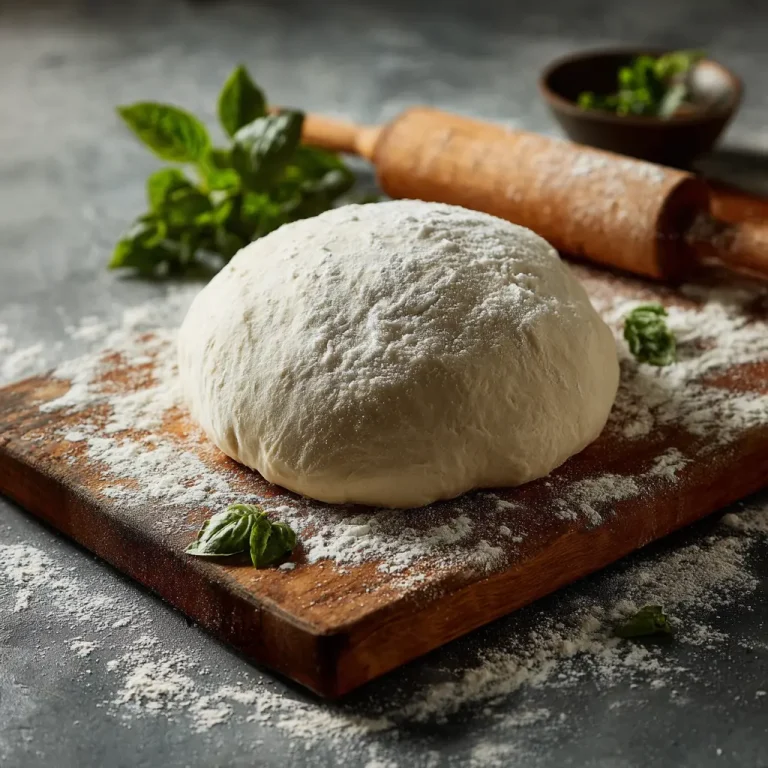
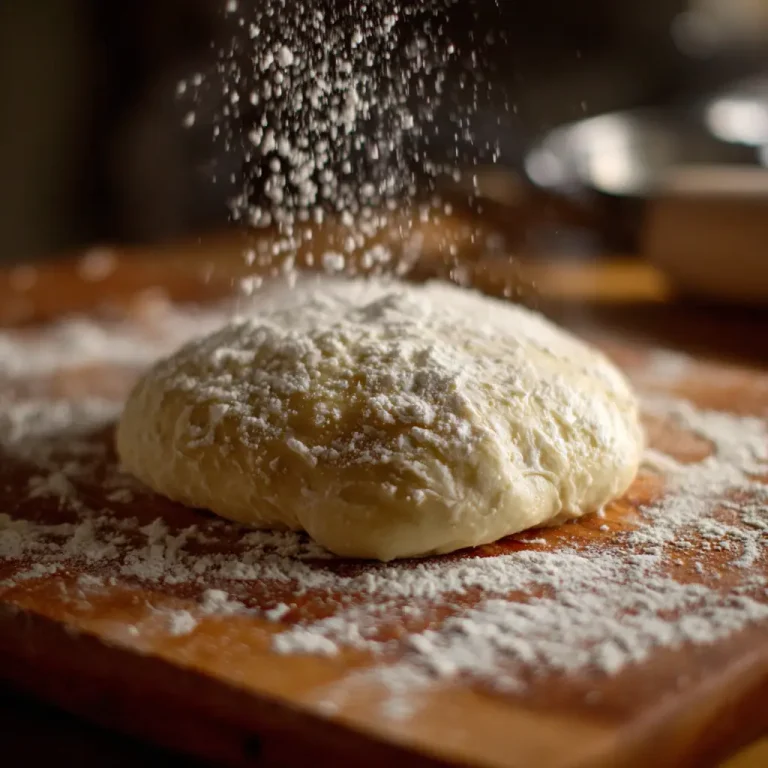
Turn the dough out onto a lightly floured surface and knead for about 8 minutes. Push, fold, and rotate until the dough becomes smooth, soft, and slightly tacky but not sticky to the touch. This kneading develops the gluten structure that gives naan its characteristic chew. Add a light dusting of flour only if the dough clings stubbornly to your hands, but avoid overdoing it.
Let It Rise
Place the kneaded dough into a lightly oiled bowl, cover it with a damp cloth or plastic wrap, and set it somewhere warm. Let it rest for 1 to 1.5 hours, or until it has roughly doubled in size. This resting period allows the yeast to produce gas bubbles that create naan’s soft, airy interior. Skipping or rushing this step will leave you with a dense, flat bread instead of a fluffy one.
Shape the Naan
Punch down the risen dough to release trapped air, then divide it into 6 to 8 equal portions. Roll each portion into a ball, then flatten with a rolling pin into an oval or teardrop shape about a quarter-inch thick. Keep the shaped pieces covered with a towel while you work through the batch so they don’t dry out or form a crust on the surface before cooking.
Cook on a Hot Skillet
Heat a cast iron skillet over medium-high heat until it’s very hot. Place a shaped naan onto the dry skillet and watch for bubbles to form on the surface within 30 to 45 seconds. Flip it over and press gently with a spatula to encourage even puffing. Cook until both sides show golden-brown char spots, roughly 1 to 2 minutes total per naan.
Brush and Serve
As soon as each naan comes off the skillet, brush it generously with melted garlic butter while it’s still hot. The residual heat helps the butter soak in and the garlic bloom instantly. Stack the finished naans under a clean kitchen towel to keep them warm and soft. Serve immediately alongside curry, dal, or grilled meats for the best texture and flavor.
Cook Time
Total
Approximately 1 hour 45 minutes, including rise time
Prep
20 minutes active preparation, plus 1 to 1.5 hours resting
Bake
15 to 20 minutes on the stovetop for the full batch
Servings
This recipe makes approximately 6 to 8 pieces of naan, depending on how large you roll each portion. That yield comfortably feeds four people as a side bread, with a couple of extra pieces for second helpings or mopping up leftover sauce.
If you’re serving a larger group or pairing the naan with a heavier main course like butter chicken or a rich lamb curry, consider doubling the recipe. The dough scales predictably, and extra naan freezes well for later use, so there’s little downside to making more than you think you need.
For smaller households, half portions still cook evenly on the same skillet, though you may want to keep an eye on rise time since smaller batches of dough can sometimes proof slightly faster in a warm kitchen.
Common Mistakes in This Recipe
The most frequent misstep is using water that’s too hot when activating the yeast, which kills it before the dough even gets a chance to rise. Yeast is sensitive, and water above 110°F can damage it permanently without giving any obvious warning sign until much later.
Another common error is skipping the resting time or cutting it short because the cook is in a hurry. Naan dough genuinely needs that full hour or more to develop the air pockets responsible for its soft, pillowy texture, and shortcuts here always show up in the final bread.
Overcrowding the skillet or cooking at too low a heat is another issue home cooks run into. Naan needs intense, direct heat to blister and puff quickly, and a lukewarm pan simply produces a pale, tough disc instead of the charred, chewy bread you’re aiming for.
Finally, many people over-flour the dough while kneading or rolling, which results in dense, dry naan. A slightly tacky dough is exactly what you want, even if it feels counterintuitive at first.
Solutions to Common Mistakes
To avoid killing your yeast, always test your water temperature with a finger before mixing. It should feel warm like bathwater, never hot to the touch. A kitchen thermometer aiming for 100 to 110°F removes all the guesswork if you want to be precise every time.
For the rising stage, find a genuinely warm spot, such as an oven with just the light on, and commit to the full hour or more. Set a timer instead of guessing, and look for the dough to have visibly doubled before moving forward with shaping.
Preheat your skillet for a full 3 to 5 minutes over medium-high heat before adding any dough. It should be hot enough that a drop of water sizzles and evaporates almost instantly on contact.
When kneading, resist the urge to add flour repeatedly. Lightly oil your hands instead of flouring the surface, which keeps the dough soft and manageable without drying it out.
Nutritional Information (approx. per serving)
- Calories: 210 kcal
- Protein: 6 g
- Carbohydrates: 32 g
- Fat: 7 g
- Fiber: 1.5 g
- Sodium: 240 mg
- Calcium: 40 mg
Naan made at home offers a meaningful nutritional advantage over restaurant or packaged versions, mainly because you control the fat and sodium going into it. The yogurt in the dough contributes a modest boost of protein and calcium, both of which support bone health and muscle maintenance.
Using yogurt instead of heavier dairy like cream or excess butter keeps the fat content moderate while still delivering that signature tenderness. This makes the bread a reasonably balanced carbohydrate source when paired with protein-rich curries, lentils, or grilled vegetables.
Because this recipe skips deep frying entirely and relies on a dry skillet, it avoids the added oils that many commercial naan varieties soak up during preparation. That alone makes a noticeable difference in overall calorie count per piece.
Whole wheat flour can be substituted for part of the all-purpose flour if you want additional fiber, which supports digestion and helps the bread keep you fuller for longer after a meal.
Storage Instructions
Leftover naan keeps well at room temperature for up to a day if wrapped tightly in a clean kitchen towel or sealed in a bag. This prevents the bread from drying out or picking up unwanted moisture from the surrounding air.
For longer storage, refrigerate cooked naan in an airtight container or zip-top bag for up to 4 days. The bread will firm up slightly in the fridge, but a quick reheat restores much of its original softness and pliability.
Freezing is the best option if you’ve made a larger batch. Stack cooled naan pieces with parchment paper between each one, then place them in a freezer-safe bag. They’ll keep well for up to 2 months without a significant drop in quality.
To reheat, warm frozen or refrigerated naan directly in a dry skillet over medium heat for about a minute per side, or wrap in foil and warm in a low oven until soft again.
Suggestions
Naan pairs naturally with rich, saucy dishes that benefit from a sturdy bread for scooping. Butter chicken, chickpea curry, and slow-cooked dal are classic partners that let the bread’s soft texture shine as a functional utensil as much as a side dish.
For a lighter meal, use naan as a base for quick flatbread pizzas, topped with a thin layer of sauce, cheese, and vegetables, then finished briefly under the broiler for a fast weeknight dinner that still feels a little special.
Leftover naan also makes excellent dippers for hummus, tzatziki, or a simple herbed yogurt sauce, turning it into a quick appetizer or snack well outside its traditional curry pairing.
Try experimenting with stuffed variations, tucking a spoonful of spiced potato or minced garlic and herbs into the dough before rolling it out, for a heartier version that stands on its own as a light meal.
Seasonal Relevance
Naan works beautifully year-round, but it earns a special place at the table during colder months, when warm, freshly cooked bread straight off the skillet feels especially comforting alongside hearty stews and curries.
During summer entertaining, naan becomes an easy addition to backyard barbecues, served alongside grilled kebabs, tikka, or marinated vegetables, offering a soft contrast to smoky, charred flavors from the grill.
Around the holidays, homemade naan can elevate a festive spread, standing in as an impressive, made-from-scratch bread option that feels more thoughtful than store-bought rolls or standard dinner bread.
It also fits naturally into Ramadan iftar spreads or Diwali dinners, where warm, freshly made flatbreads are a traditional and welcome centerpiece alongside a variety of rich, spiced dishes shared with family and friends.
Final Words
Homemade naan proves that some of the most satisfying breads don’t require specialized equipment or years of baking experience. With a hot skillet and a little patience during the rise, anyone can recreate that soft, blistered texture at home.
This recipe rewards attention to small details, like water temperature and rise time, rather than complicated technique. Once you’ve made it a couple of times, the process becomes almost second nature, and the results consistently impress.
Keep this recipe in your regular rotation whenever you’re serving curry, dal, or grilled meats, since fresh naan elevates even a simple weeknight meal into something that feels intentional and complete.
Don’t be afraid to experiment with the optional add-ins once you’re comfortable with the base recipe. Garlic, herbs, and seeds each bring their own character, letting you customize the bread to match whatever you’re serving alongside it.
Frequently Asked Questions
Can I make this naan without a stand mixer or bread machine? Yes, this recipe is designed for hand-kneading and requires no special equipment. A large bowl, your hands, and a rolling pin are all you need to produce soft, properly developed dough from start to finish.
Why did my naan turn out tough instead of soft? Tough naan usually results from over-kneading, adding too much flour, or overcooking on the skillet. Stick to the measured flour amount, knead just until smooth, and cook quickly over high heat for the best texture.
Can I use Greek yogurt instead of regular plain yogurt? Yes, Greek yogurt works well, though it’s thicker, so you may need slightly more water to reach the same soft dough consistency. The extra protein can also make the naan a touch more tender.
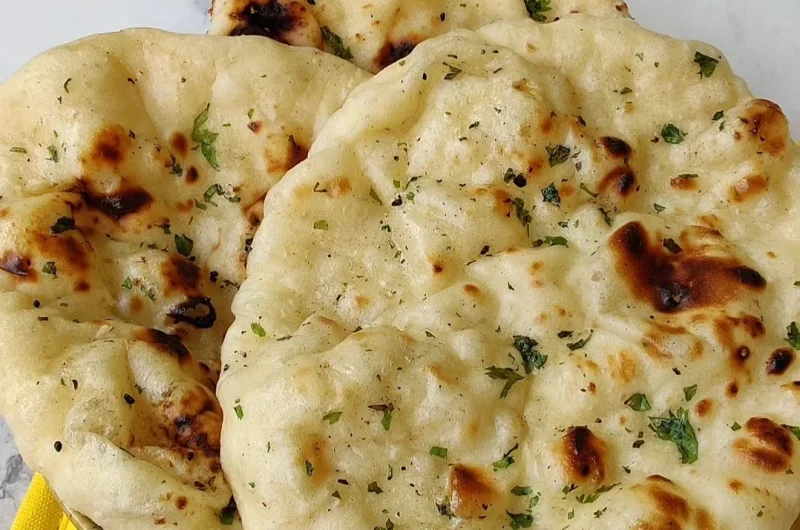
Soft Homemade Naan Bread on the Stovetop
6
servings20
minutes20
minutes210
kcalSoft, chewy naan made on the stovetop with yogurt dough and a hot cast iron skillet. No oven, no tandoor. Finished with garlic butter for the perfect side to curry, dal, or kebabs.
Ingredients
Base Ingredients
2 cups all-purpose flour
1 teaspoon instant yeast
1 teaspoon sugar
1/2 teaspoon salt
1/2 teaspoon baking powder
1/2 cup plain yogurt
1/2 cup warm water (adjust as needed)
2 tablespoons vegetable oil
Optional Add-ins
2 cloves garlic, minced
2 tablespoons chopped fresh cilantro
1/4 teaspoon nigella seeds (kalonji)
1/4 teaspoon carom seeds (ajwain)
3 tablespoons melted butter, for brushing
1/4 teaspoon chili flakes
Directions
- Combine warm water, sugar, and yeast; let sit 5-8 minutes until foamy.
- Whisk flour, salt, and baking powder in a large bowl.
- Add yogurt, oil, and yeast mixture; mix into a shaggy dough.
- Knead on a floured surface for 8 minutes until smooth and slightly tacky.
- Place in an oiled bowl, cover, and let rise 1 to 1.5 hours until doubled.
- Punch down dough and divide into 6-8 equal balls.
- Roll each ball into an oval, about a quarter-inch thick.
- Heat a cast iron skillet over medium-high heat until very hot.
- Cook each naan 30-45 seconds per side until bubbled and charred.
- Brush hot naan immediately with melted garlic butter and serve warm.
Recipe Video
Notes
- Water for yeast should be warm (100-110°F), not hot, or it will kill the yeast.
- Don’t skip or rush the rise time; it’s essential for a soft, airy texture.
- Preheat the skillet fully before cooking for proper char and puff.
- Avoid over-flouring the dough; a slightly tacky texture yields the best chew.
- Leftover naan freezes well for up to 2 months.