There’s something about a warm slice of Southern cornbread fresh from the oven that just feels like home. Golden, fluffy, and buttery in every bite, this easy cornbread recipe works with a jiffy mix or completely from scratch. Whether you pair it with chili, drizzle it with honey, or serve it at the holiday table, this is the one recipe that never lets you down.
Great cornbread comes down to two things: the right ratio of cornmeal to flour, and a screaming-hot skillet. Skip either one, and you end up with something dry, crumbly, or flat. This version fixes both problems, giving you a loaf that’s tender inside with a deep golden crust that shatters slightly when you cut into it.
I’ve tested this recipe more times than I can count, tweaking the buttermilk ratio and sugar levels until the texture hit that sweet spot between cake-like and rustic. The result is a cornbread that holds its shape, slices cleanly, and stays moist for days without turning gummy.
Simple enough for weeknights, special enough for every occasion, this is the cornbread recipe you’ll actually keep coming back to. Save this recipe and make it tonight.
Ingredients You’ll Need
Great cornbread doesn’t need a long ingredient list to taste like it came from a Southern kitchen table. It just needs the right balance of fat, buttermilk, and cornmeal, all working together to build that signature crumb.
One of the things I love about this recipe is that it uses simple pantry ingredients. You probably already have most of them in your kitchen.
Base Ingredients:
- 1 cup yellow cornmeal
- 1 cup all-purpose flour
- 1/4 cup granulated sugar
- 1 tablespoon baking powder
- 1/2 teaspoon baking soda
- 3/4 teaspoon salt
- 1 cup buttermilk
- 2 large eggs
- 1/3 cup melted unsalted butter
- 2 tablespoons vegetable oil
- 1 tablespoon honey
Optional Add-ins:
- 1 cup fresh or frozen corn kernels
- 1/2 cup shredded sharp cheddar cheese
- 2 tablespoons chopped jalapeños
- 2 tablespoons chopped fresh chives
- 1/4 teaspoon smoked paprika
- 2 tablespoons crumbled cooked bacon
Step-by-Step Instructions
Preheat and Prep the Skillet
Preheat your oven to 425°F and place a 10-inch cast iron skillet inside while it heats. Letting the skillet get hot alongside the oven is the secret to that crisp, buttery crust everyone loves. While it warms, gather your ingredients so they come together quickly once the batter is mixed. A hot skillet also means the batter starts cooking the moment it hits the surface, giving you that unmistakable golden edge.
Mix the Dry Ingredients
In a large mixing bowl, whisk together the cornmeal, flour, sugar, baking powder, baking soda, and salt. Whisking thoroughly at this stage prevents pockets of baking powder from creating uneven rise later. Make sure the mixture looks uniform in color with no visible clumps of cornmeal or flour. This dry base sets the structure for a cornbread that’s tender rather than dense or gritty once baked.
Combine the Wet Ingredients
In a separate bowl, whisk the buttermilk, eggs, melted butter, oil, and honey until fully blended. The honey adds subtle sweetness and helps the crust caramelize beautifully in the oven. Make sure the melted butter isn’t too hot, or it may scramble the eggs slightly. This mixture should look smooth, glossy, and pale yellow before you move on to combining it with the dry ingredients.
Fold the Batter Together
Pour the wet mixture into the dry ingredients and fold gently with a spatula. Stir just until no dry streaks remain; overmixing leads to a tough, rubbery texture instead of a light crumb. If you’re adding corn kernels, cheese, or jalapeños, fold them in now. The batter should be thick but pourable, similar to a cake batter rather than a thin pancake mixture.
Bake to a Golden Crust
Carefully remove the hot skillet, add a tablespoon of butter to coat the bottom, and pour in the batter immediately. You should hear a satisfying sizzle as it hits the pan. Bake for 20 to 22 minutes, until the top is golden and a toothpick inserted in the center comes out clean. Let it rest for 10 minutes before slicing to allow the crumb to set properly.
Cook Time
Total:
40 minutes
Prep:
15 minutes
Bake:
22 minutes
Servings
This recipe makes approximately 10 generous slices, perfect for a family dinner or a casual gathering with friends. A standard 10-inch cast iron skillet gives you enough surface area for even baking without the center staying underdone, which is a common issue with smaller pans.
If you’re serving a bigger crowd, this recipe doubles easily using two skillets baked side by side, or a 9×13-inch baking dish for a larger, flatter batch. Just keep an eye on the bake time, since a wider pan usually finishes a few minutes faster than a deep skillet.
For smaller households, leftover slices freeze beautifully, so you don’t need to shrink the recipe. Bake the full batch and portion it out for busy mornings or quick side dishes throughout the week.
Common Mistakes in This Recipe
The most common issue home cooks run into is overmixing the batter once the wet and dry ingredients meet. This activates the gluten in the flour, resulting in a dense, chewy texture instead of the light, tender crumb Southern cornbread is known for. It happens easily when people treat this like a pancake batter that needs vigorous stirring.
Another frequent mistake is skipping the step of preheating the skillet. Pouring batter into a cold pan means the edges won’t develop that signature crispy, buttery crust, and the bread can end up pale and soft all the way around instead of contrasted in texture.
Using cold buttermilk and eggs straight from the fridge can also cause the melted butter to seize and clump, leading to uneven texture throughout the loaf once baked.
Finally, cutting into the cornbread too soon causes it to crumble apart, since the crumb hasn’t finished setting while it’s still hot from the oven.
Solutions to Common Mistakes
To avoid a dense crumb, fold the batter gently and stop mixing the moment the dry streaks disappear. A few small lumps are perfectly fine and actually help keep the texture light rather than compacted.
Always preheat your skillet in the oven for at least 10 minutes before adding batter. This single step makes the biggest difference in achieving that crisp, buttery bottom crust everyone raves about.
Bring your buttermilk and eggs to room temperature before mixing, or warm them slightly. This keeps the melted butter smooth and evenly distributed, preventing clumping or greasy pockets in the finished bread.
Let the cornbread rest for a full 10 minutes after baking before slicing. This resting period allows the interior structure to firm up, so your slices hold together cleanly instead of falling apart.
Nutritional Information (approx. per serving)
- Calories: 210
- Carbohydrates: 27g
- Protein: 5g
- Fat: 9g
- Saturated Fat: 4g
- Fiber: 1g
- Sugar: 6g
- Sodium: 320mg
Cornmeal itself brings more to the table than just flavor and color; it’s a whole grain that offers fiber and small amounts of iron, supporting digestion and steady energy throughout the day. Compared to many quick breads, this cornbread leans lighter thanks to buttermilk replacing heavier dairy options.
The eggs and buttermilk combination contributes a meaningful dose of protein and calcium per slice, making this more filling than a typical dinner roll and better suited to pairing with lean proteins or vegetable-forward meals.
Using butter and a modest amount of oil rather than shortening keeps the fat content moderate while still delivering that rich, satisfying mouthfeel Southern cornbread is loved for.
Because this recipe controls added sugar carefully, it fits comfortably alongside savory dishes like chili or barbecue without tipping the meal into dessert territory, making it a versatile addition to a balanced plate.
Storage Instructions
Once fully cooled, store leftover cornbread in an airtight container at room temperature for up to two days. Keeping it covered prevents the crust from drying out while the interior stays soft and moist.
For longer storage, refrigerate the cornbread in a sealed container for up to five days. Bring slices to room temperature or warm them briefly before serving, since cold cornbread tends to taste drier and less flavorful.
This recipe also freezes exceptionally well. Wrap individual slices tightly in plastic wrap, then place them in a freezer-safe bag for up to three months, which makes portioning out quick breakfasts or side dishes effortless.
To reheat, warm slices in a 300°F oven for about 8 minutes, or microwave for 20 to 30 seconds. Avoid overheating, as it can toughen the crumb and dry out the edges.
Suggestions
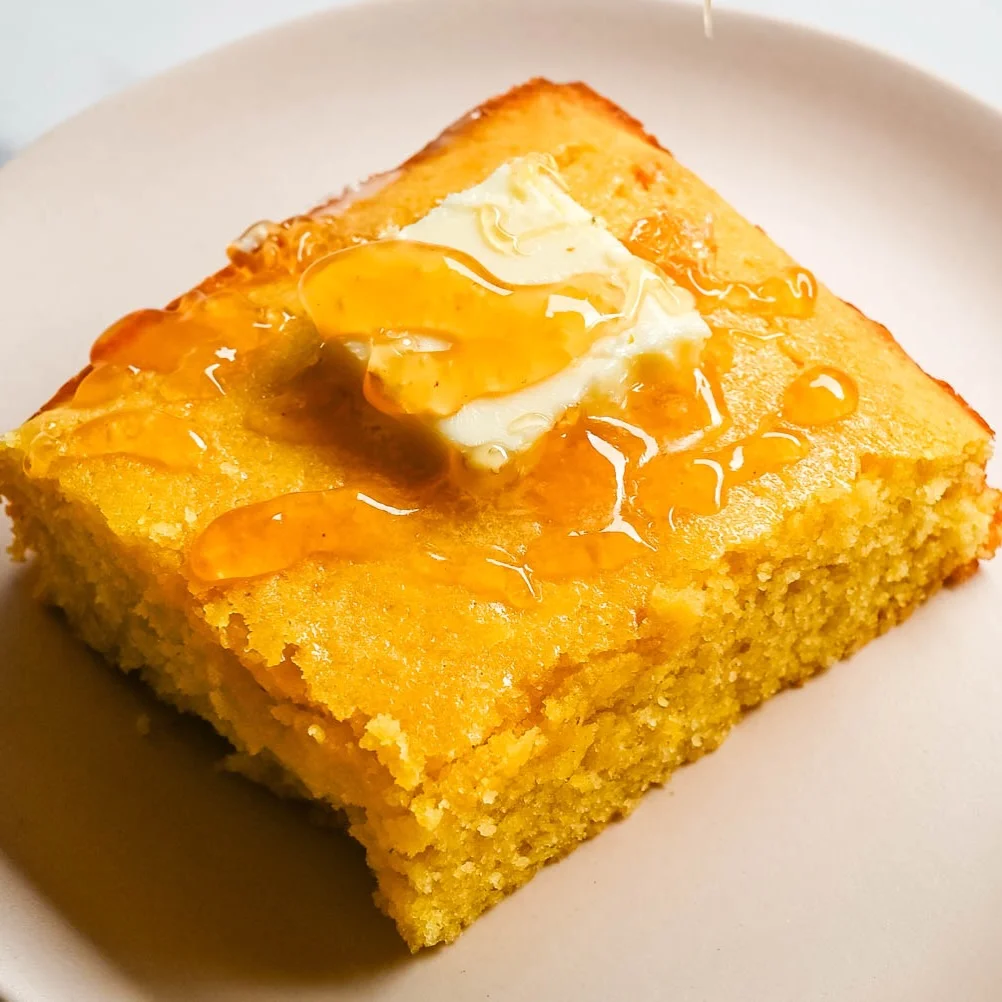
Serve warm slices with a generous drizzle of honey or hot honey for a sweet-and-spicy contrast that pairs beautifully with the buttery crust. A pat of softened butter melting into a warm piece is hard to beat.
This cornbread makes an excellent companion to chili, barbecue, or a pot of collard greens, soaking up sauces and pan juices without falling apart, which makes it a reliable side for hearty, comforting meals.
For breakfast, try toasting a slice and topping it with a fried egg or a spoonful of jam, turning leftovers into a satisfying morning plate with almost no extra effort.
If you’re feeling creative, cube leftover cornbread and use it as the base for a cornbread stuffing or a savory bread pudding, giving day-old slices a completely new life at the table.
Seasonal Relevance
Cornbread has deep roots in autumn and winter cooking, showing up alongside chili, roasted vegetables, and holiday spreads from Thanksgiving through the New Year. Its warm, golden color and buttery aroma feel perfectly suited to cooler months.
That said, this recipe holds its own year-round, especially in summer when fresh corn kernels are in season and can be folded directly into the batter for extra sweetness and texture.
During the holidays, this cornbread works beautifully as part of a larger spread, sitting comfortably next to turkey, ham, or a vegetarian main without competing for attention on a crowded table.
Whether it’s a chilly evening in January or a backyard cookout in July, a well-made skillet of cornbread rarely feels out of place, which is part of why it remains a year-round favorite across the South.
Final Words
This cornbread recipe strikes the balance so many versions miss: fluffy on the inside, crisp and buttery around the edges, and never dry or crumbly. It’s the kind of bread that turns a simple weeknight dinner into something worth remembering.
What makes it especially worth keeping in your regular rotation is how forgiving and adaptable it is. Add cheese, jalapeños, or fresh corn, and it still turns out reliably good every single time you make it.
Whether you’re serving it alongside a bowl of chili on a cold evening or bringing it to a holiday table full of family, this recipe delivers the kind of comfort that doesn’t need explaining.
Give it a try tonight, and don’t be surprised if it becomes the cornbread recipe you keep coming back to for every occasion, big or small.
Frequently Asked Questions
Can I make this cornbread without a cast iron skillet?
Yes, a 9-inch round or square baking pan works fine. You won’t get quite the same crispy edge, but the flavor and texture stay just as fluffy. Preheating the pan briefly still helps mimic that classic buttery crust effect.
Why did my cornbread turn out crumbly instead of holding together?
Crumbly cornbread usually means too much cornmeal relative to flour, or slicing before it’s rested. Stick to the exact ratio in this recipe and let it cool for 10 minutes before cutting for clean, sturdy slices.
Can I substitute the buttermilk if I don’t have any?
Yes, mix 1 cup regular milk with 1 tablespoon lemon juice or white vinegar, then let it sit for 5 minutes. This creates a quick buttermilk substitute that still delivers the necessary tang and tenderness.
Fluffy Southern Cornbread with a Buttery Crust
10
servings15
minutes22
minutes210
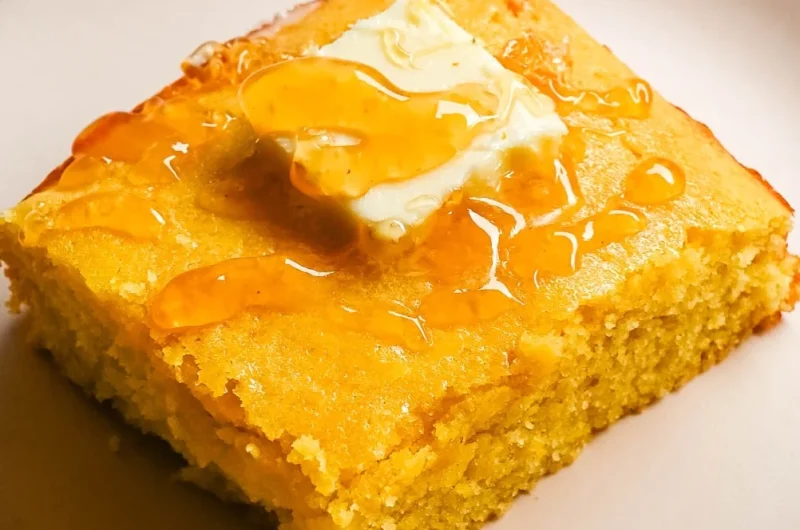
kcalGolden, fluffy Southern cornbread with a buttery, crisp crust. Made in a hot cast iron skillet with buttermilk and honey, it’s tender inside, rich in flavor, and perfect alongside chili, barbecue, or a holiday spread.
Ingredients
Base Ingredients:
1 cup yellow cornmeal
1 cup all-purpose flour
1/4 cup granulated sugar
1 tablespoon baking powder
1/2 teaspoon baking soda
3/4 teaspoon salt
1 cup buttermilk
2 large eggs
1/3 cup melted unsalted butter
2 tablespoons vegetable oil
1 tablespoon honey
Optional Add-ins:
1 cup fresh or frozen corn kernels
1/2 cup shredded sharp cheddar cheese
2 tablespoons chopped jalapeños
2 tablespoons chopped fresh chives
1/4 teaspoon smoked paprika
2 tablespoons crumbled cooked bacon
Directions
- Preheat oven to 425°F and place a 10-inch cast iron skillet inside to heat.
- Whisk together cornmeal, flour, sugar, baking powder, baking soda, and salt in a large bowl.
- In a separate bowl, whisk buttermilk, eggs, melted butter, oil, and honey until smooth.
- Pour wet ingredients into dry ingredients and fold gently until no dry streaks remain.
- Fold in any optional add-ins, such as corn, cheese, or jalapeños.
- Remove the hot skillet, coat with a tablespoon of butter, and pour in the batter immediately.
- Bake for 20 to 22 minutes, until golden and a toothpick comes out clean.
- Let rest for 10 minutes before slicing and serving.
Recipe Video
Notes
- Preheating the skillet is essential for a crisp, buttery crust.
- Avoid overmixing the batter to keep the crumb light and tender.
- Bring buttermilk and eggs to room temperature for smoother batter consistency.
- Let the cornbread rest before slicing to prevent crumbling.
- Store leftovers in an airtight container for up to 2 days at room temperature, or freeze for up to 3 months.