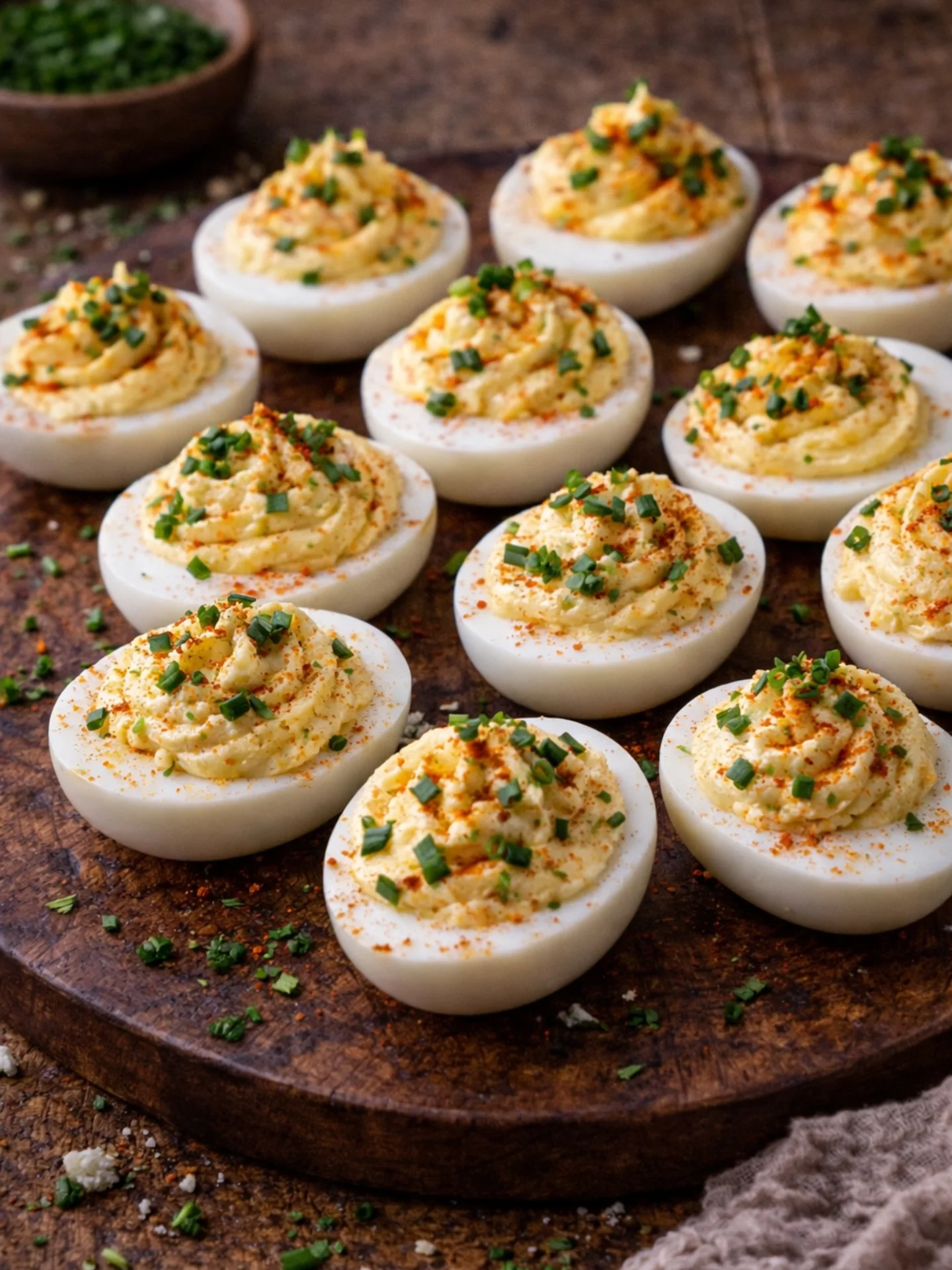
Deviled eggs have a way of vanishing before anything else on the table. They arrive golden, glossy, and dusted with paprika, and within minutes the platter is empty while the casseroles sit untouched. There’s a reason this dish has survived decades of shifting food trends without losing its spot at every holiday gathering.
The truth is, most deviled egg failures come down to two overlooked details: eggs that refuse to peel cleanly, and a filling that turns out gritty instead of silky. Once you understand why those problems happen, the fix is almost embarrassingly simple.
This recipe walks you through the two tricks that separate amateur deviled eggs from the ones people ask you to bring every single year. Older eggs peel far more easily than fresh ones, and pushing the cooked yolks through a fine sieve eliminates lumps entirely, giving you a filling that pipes like soft-serve.
Once you’ve mastered the classic version, you’ll find variations built right in, from smoky bacon and chive to an elegant smoked paprika and dill finish. Consider this your last deviled egg recipe search.
Ingredients You’ll Need
Great deviled eggs don’t hide behind fancy techniques or hard-to-find ingredients; they rely on getting a handful of basics exactly right. Here’s everything that goes into the creamiest, most balanced filling you’ll make.
One of the things I love about this recipe is that it uses simple pantry ingredients. You probably already have most of them in your kitchen.
Base Ingredients
- 12 large eggs
- 1/2 cup mayonnaise
- 1 tablespoon Dijon mustard
- 1 teaspoon yellow mustard
- 1 tablespoon white vinegar or pickle juice
- 1/4 teaspoon salt
- 1/8 teaspoon black pepper
- 1/2 teaspoon smoked paprika, plus extra for garnish
Optional Add-ins
- 3 slices bacon, cooked and crumbled
- 2 tablespoons fresh chives, finely chopped
- 1/4 teaspoon smoked paprika (for the smoky-dill variation)
- 1 tablespoon fresh dill, chopped
- 1 teaspoon sriracha or hot sauce
- 1 tablespoon finely diced dill pickles
- 1/4 teaspoon garlic powder
Step-by-Step Instructions
Boil the Eggs Properly
Place eggs in a single layer in a saucepan and cover with cold water by an inch. Bring to a rolling boil, then immediately remove from heat, cover, and let sit for 11 minutes. This gentle method prevents the greenish ring around the yolk and keeps the whites tender rather than rubbery. Timing matters more than temperature here, so resist the urge to guess.
Shock and Peel
Transfer the eggs to an ice bath immediately after boiling and let them sit for at least 10 minutes. The sudden temperature change shrinks the egg away from the shell membrane, making peeling dramatically easier. Crack each egg gently all over, then peel under cool running water. Using eggs that are a week or two old also makes a noticeable difference here.
Separate and Sieve the Yolks
Slice each egg lengthwise and pop the yolks into a bowl, setting the whites aside on a tray. Push the yolks through a fine mesh sieve using the back of a spoon. This single step removes every lump before you’ve even added liquid, giving you a base that’s already smooth and ready to season.
Mix the Filling
Add mayonnaise, both mustards, vinegar, salt, pepper, and smoked paprika to the sieved yolks. Whisk until completely smooth and light in texture, adjusting mayonnaise for creaminess or mustard for tang. Taste and season again; cold eggs mute flavor, so the filling should taste slightly bold on its own before it goes back into the whites.
Pipe and Garnish
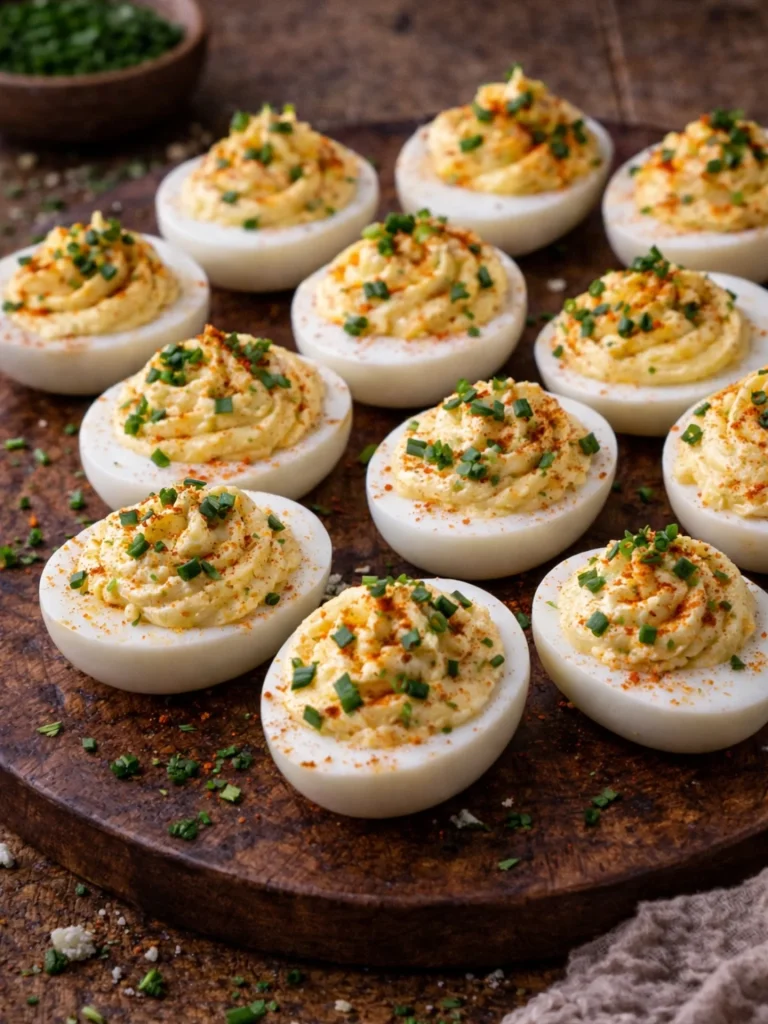
Spoon the filling into a piping bag fitted with a star tip, or use a zip-top bag with the corner snipped off. Pipe generously into each egg white half, creating a swirl at the top. Finish with a light dusting of smoked paprika, and add bacon, chives, or dill depending on the variation you’re making.
Cook Time
Total: 35 minutes
Prep: 20 minutes
Bake: Not applicable (stovetop only)
Servings
This recipe makes approximately 24 deviled egg halves, using a full dozen eggs as the base. That yields enough for a mid-sized gathering, though the tray tends to empty faster than any other appetizer on the table.
For smaller get-togethers, the recipe halves cleanly with six eggs, producing 12 pieces, which suits a casual dinner or a small family meal without leftovers going to waste.
If you’re hosting a larger holiday crowd, doubling the batch to 24 eggs gives you 48 halves, a number that comfortably covers a buffet-style spread alongside other appetizers and mains.
Common Mistakes in This Recipe
The most frequent mistake is overcooking the eggs, which pushes sulfur to the surface of the yolk and creates that unappealing gray-green ring. Many cooks also skip the ice bath entirely, assuming a quick rinse under cool tap water is close enough, but this shortcut leaves eggs harder to peel and slightly overcooked from residual heat.
Another common issue is using fresh eggs straight from the carton. Fresh eggs have a lower pH and cling stubbornly to their shells, resulting in torn, pockmarked whites that ruin presentation. Skipping the sieve step is another shortcut that backfires, leaving visible yolk lumps in a filling that should be perfectly smooth.
Finally, under-seasoning is surprisingly common, since cold dishes naturally dull flavor and require more assertive seasoning than you’d expect at room temperature.
Solutions to Common Mistakes
Set a timer the moment you remove the pot from heat, and stick to 10 to 12 minutes covered, depending on how firm you like the yolks. This precision eliminates the gray ring and keeps yolks a bright, even yellow throughout.
Always transfer eggs to a proper ice bath, not just cold water, and let them sit for a full 10 minutes before peeling. This step alone solves most peeling frustrations.
Buy your eggs at least a week before cooking, since slightly older eggs peel far more predictably than fresh ones purchased the same day.
Push every yolk through a sieve without exception, and taste your filling before piping, adjusting salt and acid until it tastes slightly stronger than you’d want it at room temperature.
Nutritional Information (approx. per serving)
- Calories: 70 kcal
- Protein: 3.5 g
- Fat: 6 g
- Saturated Fat: 1.5 g
- Carbohydrates: 0.5 g
- Cholesterol: 125 mg
- Sodium: 95 mg
Eggs are one of the most complete protein sources available, delivering all nine essential amino acids in a single, affordable ingredient. This makes deviled eggs a surprisingly practical option for anyone trying to add more protein to a party spread without relying on heavier, meat-based appetizers.
Beyond protein, eggs supply choline, a nutrient that supports brain and liver function but is often missing from typical Western diets. A single deviled egg half delivers a meaningful contribution toward daily choline needs, especially valuable for pregnant women and growing children.
The fat content here comes primarily from mayonnaise and egg yolk, both of which help the body absorb fat-soluble vitamins like A, D, and E more efficiently than a fat-free dish would allow.
Because each piece is naturally low in carbohydrates, deviled eggs fit comfortably into keto, low-carb, and gluten-free eating patterns, making them one of the rare party foods that nearly every guest can enjoy without modification.
Storage Instructions
Deviled eggs are best stored in an airtight container in the refrigerator, ideally in a single layer so the filling doesn’t smear against the lid or other eggs. Properly stored, they stay fresh and safe to eat for up to three days.
If you’re prepping ahead of a party, store the egg white halves and the piped filling separately, then assemble no more than a few hours before serving. This keeps the whites from absorbing excess moisture and turning watery.
Avoid freezing deviled eggs under any circumstances. The egg whites turn rubbery and develop a spongy, unpleasant texture once thawed, and the filling tends to separate, losing its creamy consistency entirely.
When transporting deviled eggs to a party, use a dedicated carrier tray with individual wells, or nestle them into a shallow container lined with plastic wrap to prevent sliding and keep the garnish intact.
Suggestions
For a smokier, more indulgent version, fold crumbled crispy bacon and finely chopped chives directly into the filling before piping, then finish with an extra pinch of bacon on top for crunch and visual appeal.
If you prefer a more refined presentation for a formal holiday dinner, skip the paprika dusting in favor of fresh dill fronds and a light sprinkle of smoked paprika, which pairs beautifully with the tang of Dijon mustard.
For guests who enjoy heat, stir a teaspoon of sriracha or a few dashes of hot sauce into the yolk mixture, then top with a thin slice of pickled jalapeño for a spicy, punchy bite.
Pair the finished platter with a crisp white wine or a light lager, both of which cut through the richness of the mayonnaise without overwhelming the delicate egg flavor.
Seasonal Relevance
Deviled eggs hold a permanent spot at Easter gatherings, largely thanks to the natural association between eggs and spring celebrations, but their appeal reaches far beyond that single holiday.
Summer barbecues and potlucks lean on deviled eggs because they travel well, hold up outdoors longer than mayonnaise-heavy salads, and require no reheating or last-minute cooking once assembled.
During the winter holidays, deviled eggs appear on nearly every Thanksgiving and Christmas appetizer table, valued for how quickly they come together amid an otherwise demanding cooking schedule.
Even outside major holidays, deviled eggs remain a popular choice for game-day spreads and casual weekend gatherings, proving this dish isn’t tied to any single season so much as it is tied to any occasion involving good company.
Final Words
Deviled eggs earn their reputation not through complicated technique, but through careful attention to a few small, easily overlooked details. Getting the boil time right, cooling eggs properly, and sieving the yolks are the difference between a forgettable appetizer and one guests specifically request by name.
Once you’ve nailed the classic version, this recipe becomes a template rather than a fixed formula. Swap in bacon, dill, hot sauce, or pickles depending on the crowd, and you’ll never serve the same batch twice.
What makes this dish genuinely valuable for any host is its make-ahead flexibility, paired with how quickly it disappears from the table. Few appetizers offer that combination of convenience and universal appeal.
Keep this recipe on hand for every holiday season ahead, and don’t be surprised when it becomes the dish people remember your gathering for.
Frequently Asked Questions
Can I make deviled eggs the night before a party?
Yes. Store the egg whites and filling separately in airtight containers in the refrigerator overnight, then pipe the filling into the whites just before serving to keep everything fresh, firm, and visually appealing.
Why did my egg yolks turn out off-center?
Off-center yolks usually happen when eggs sit still during boiling. Gently stirring the water for the first minute or two of cooking helps center the yolks for a more even, professional-looking presentation.
What’s the best way to prevent deviled eggs from sliding around on a serving tray?
Use a dedicated deviled egg tray with individual wells, or place a thin layer of lettuce or plastic wrap on a flat platter to create enough friction to keep each half securely in place.
The Best Deviled Eggs for Parties and Holidays
24
servings20
minutes15
minutes70
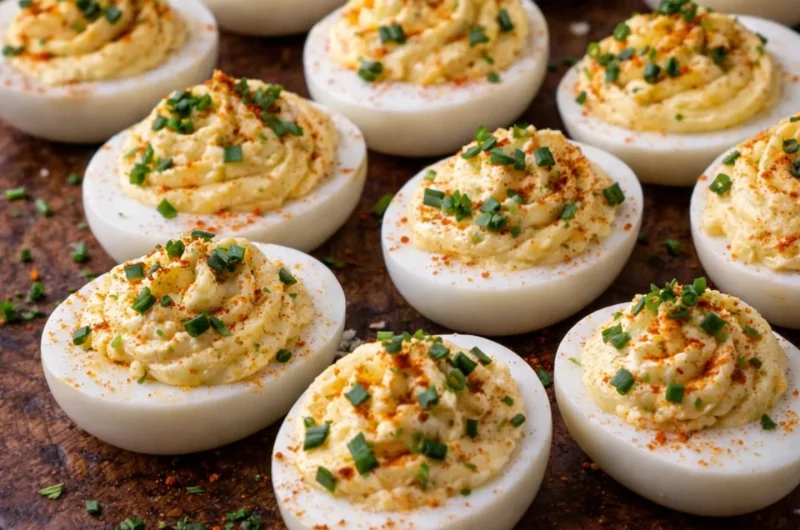
kcalClassic deviled eggs with a silky, lump-free filling made using two simple tricks: older eggs for easy peeling and a fine sieve for smooth yolks. Perfect for parties, holidays, and every gathering in between.
Ingredients
Base Ingredients
12 large eggs
1/2 cup mayonnaise
1 tablespoon Dijon mustard
1 teaspoon yellow mustard
1 tablespoon white vinegar or pickle juice
1/4 teaspoon salt
1/8 teaspoon black pepper
1/2 teaspoon smoked paprika, plus extra for garnish
Optional Add-ins
3 slices bacon, cooked and crumbled
2 tablespoons fresh chives, finely chopped
1/4 teaspoon smoked paprika (for the smoky-dill variation)
1 tablespoon fresh dill, chopped
1 teaspoon sriracha or hot sauce
1 tablespoon finely diced dill pickles
1/4 teaspoon garlic powder
Directions
- Place eggs in a saucepan, cover with cold water by an inch, and bring to a rolling boil.
- Remove from heat, cover, and let sit for 11 minutes.
- Transfer eggs to an ice bath and let sit for at least 10 minutes.
- Peel eggs gently under cool running water.
- Slice each egg lengthwise and separate yolks from whites.
- Push yolks through a fine mesh sieve into a bowl.
- Add mayonnaise, both mustards, vinegar, salt, pepper, and smoked paprika to the yolks.
- Whisk until smooth, then taste and adjust seasoning.
- Spoon filling into a piping bag fitted with a star tip.
- Pipe filling generously into each egg white half.
- Dust with smoked paprika and add optional garnishes like bacon, chives, or dill.
Recipe Video
Notes
- Use eggs that are a week or two old for easier peeling.
- Don’t skip the ice bath — it prevents overcooking and eases peeling.
- Sieve the yolks without exception to avoid a lumpy filling.
- Store egg whites and filling separately if prepping ahead; assemble just before serving.
- Do not freeze deviled eggs; texture and consistency suffer.
- Keeps well in the refrigerator for up to 3 days in an airtight container.