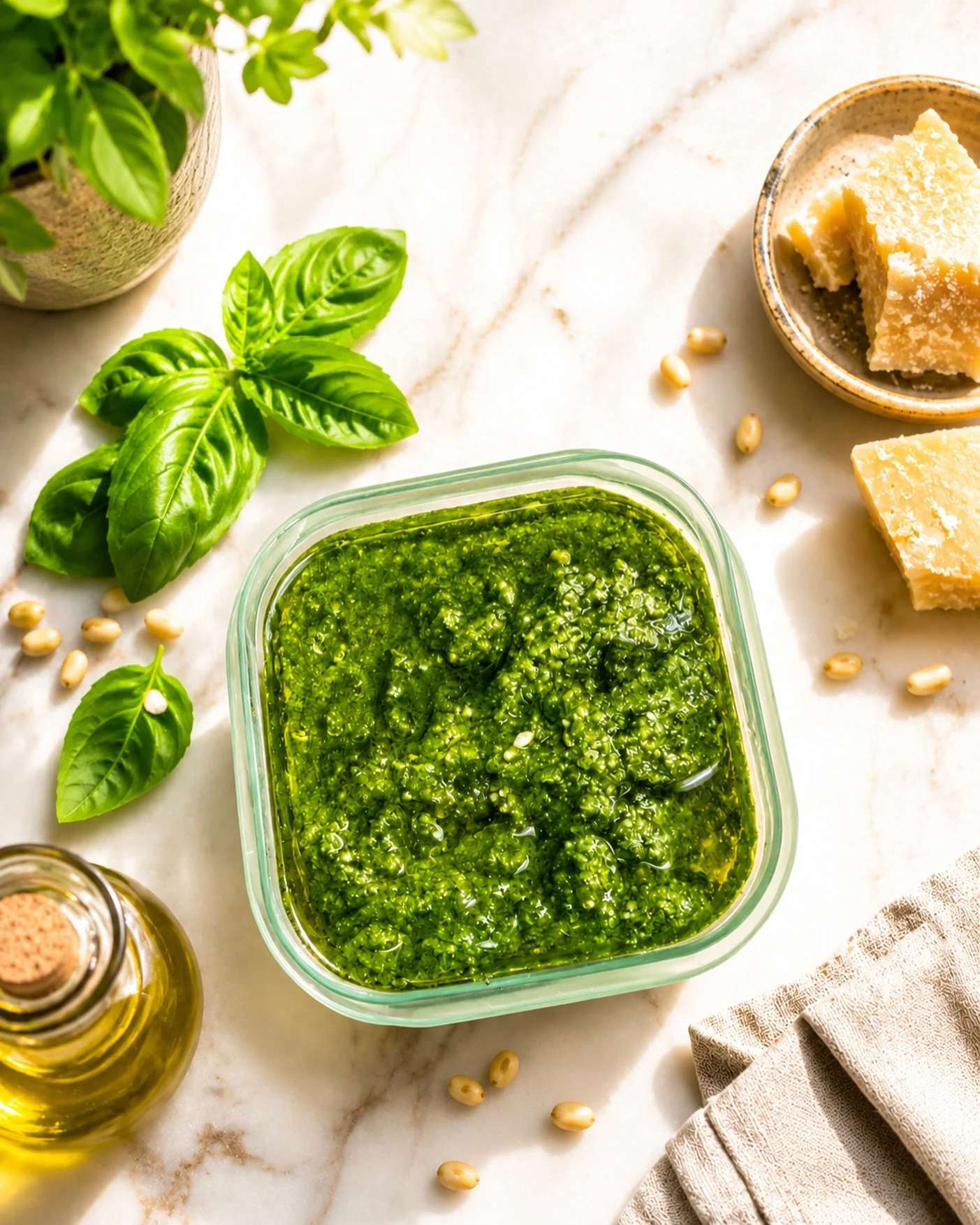
Some recipes earn their place in your weekly rotation simply because they never let you down. Pesto is one of them. It takes five minutes, a handful of ingredients, and almost no skill to turn plain pasta, toast, or roasted vegetables into something that tastes like it came from a restaurant kitchen.
This version skips pine nuts entirely, which means it is more affordable, easier to make on short notice, and friendlier for anyone dealing with nut allergies at home. You still get that deep, herbaceous flavor and silky texture that makes pesto so addictive, without hunting down an expensive ingredient that goes stale in the pantry.
What makes this recipe worth bookmarking is its flexibility. Blend it smooth for a classic sauce, or pulse it briefly for a coarser, more rustic texture that clings beautifully to short pasta shapes. Either way, the basil stays bright and the olive oil carries every bit of that flavor.
Whether you’re stirring it into soup, spreading it on a sandwich, or tossing it with hot noodles on a weeknight, this pesto solves the “what’s for dinner” question fast. Once you make it from scratch, jarred versions will feel like a compromise.
Ingredients You’ll Need
Great pesto doesn’t hide behind fancy techniques, it relies on a few honest ingredients working together, and that’s exactly why this recipe has stayed a kitchen staple for home cooks who want big flavor without the fuss.
One of the things I love about this recipe is that it uses simple pantry ingredients. You probably already have most of them in your kitchen.
Base Ingredients
- 2 cups fresh basil leaves, packed
- 1/2 cup extra virgin olive oil
- 1/2 cup grated Parmesan cheese
- 3 cloves garlic, peeled
- 1/4 cup sunflower seeds or pumpkin seeds (nut-free swap)
- 1/2 teaspoon salt
- 1/4 teaspoon black pepper
- 1 tablespoon lemon juice
Optional Add-ins
- 2 tablespoons baby spinach, for extra color and mildness
- 1/4 teaspoon red pepper flakes, for gentle heat
- 1 tablespoon nutritional yeast, for a dairy-free depth
- 1 tablespoon toasted sesame seeds, for a nutty undertone
- 1 teaspoon lemon zest, for brightness
Step-by-Step Instructions
Prep the Basil and Garlic
Wash the basil leaves gently and pat them completely dry, since trapped water dilutes the flavor and can make the pesto separate. Remove any thick stems, keeping only the tender leaves. Peel the garlic cloves and, if you prefer a milder bite, slice them in half to remove the inner green sprout. Set everything near your food processor so the next steps move quickly and the basil stays fresh and vibrant instead of wilting on the counter.
Toast the Seeds
Place the sunflower or pumpkin seeds in a dry skillet over medium heat. Toast for two to three minutes, stirring often, until they turn lightly golden and smell nutty. Watch closely, since seeds burn quickly once they start to color. Remove them from the heat immediately and let them cool for a minute or two. This small step deepens the flavor significantly and gives the pesto a richer, more complex base than using raw seeds straight from the bag.
Blend the Base
Add the basil, garlic, toasted seeds, salt, and pepper to a food processor. Pulse several times to break everything down evenly before running it continuously. With the motor running, slowly pour in the olive oil in a thin stream. This gradual addition helps the sauce emulsify properly, giving you a smoother, glossier texture rather than an oily, separated mixture that looks unappetizing on the plate.
Finish with Cheese and Lemon
Stop the processor and scrape down the sides with a spatula to catch any stray basil clinging to the bowl. Add the grated Parmesan and lemon juice, then pulse a few more times until just combined. Taste and adjust the salt or lemon here, since flavors intensify slightly once the pesto rests. For a rustic texture, pulse briefly; for a silky sauce, blend a bit longer.
Store or Serve Immediately
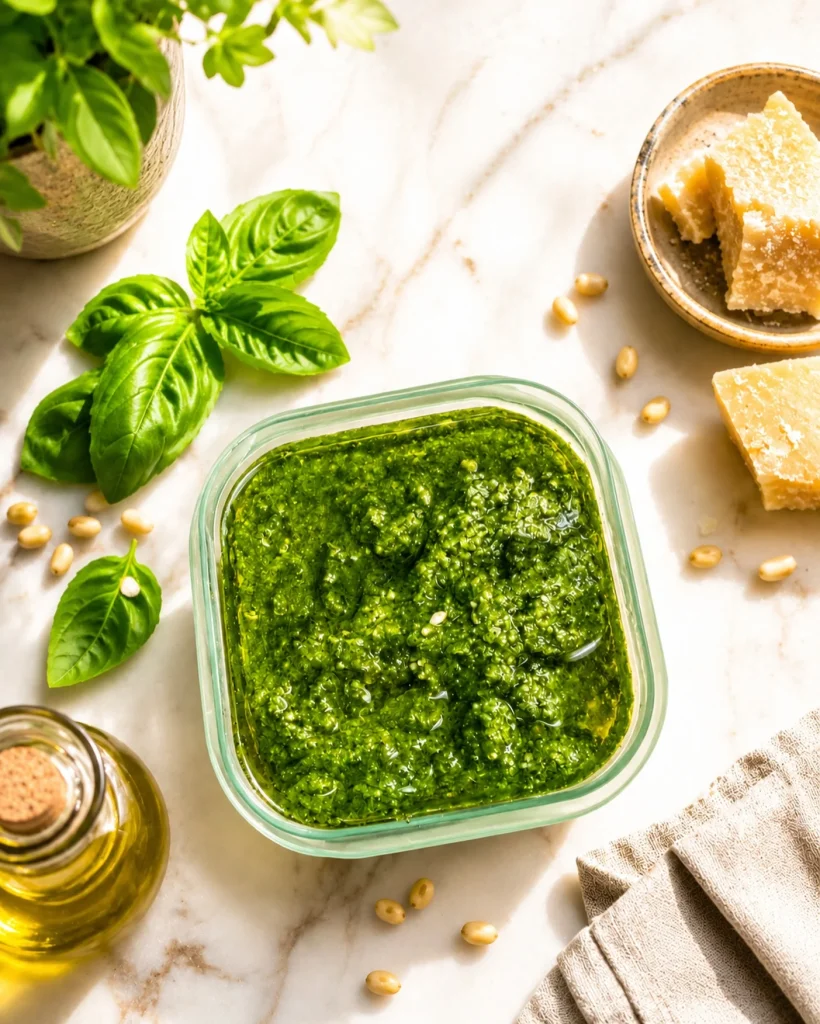
Transfer the pesto to a bowl or jar right away to stop it from oxidizing in the warm processor bowl. If serving immediately, toss it with hot pasta, spread it on warm bread, or swirl a spoonful into soup. If storing, press plastic wrap directly onto the surface or top with a thin layer of olive oil to keep the vibrant green color intact for several days.
Cook Time
Total: 5 minutes
Prep: 5 minutes
Bake: Not applicable
Servings
This recipe makes approximately 1 cup of pesto, which comfortably covers one pound of pasta or roughly six generous servings when used as a sauce, spread, or finishing swirl for soups and grain bowls.
If you’re planning a dinner party or meal prepping for the week, the recipe scales easily. Doubling the basil, garlic, seeds, and oil gives you two cups without changing the technique, so leftovers freeze well for later use in quick weeknight dinners.
Portion size really depends on how you’re using it. A tablespoon or two is plenty for a sandwich spread, while pasta dishes typically call for two to three tablespoons per serving to coat the noodles evenly without drowning them in oil.
Common Mistakes in This Recipe
The most frequent mistake is adding the olive oil too quickly, which prevents proper emulsification and leaves the pesto looking greasy and separated instead of smooth and cohesive. Rushing this step undermines the entire texture of the sauce, no matter how fresh the basil is.
Another common issue is using wet basil leaves straight from washing. Excess water dilutes the flavor and can cause the pesto to turn watery or lose its vibrant green color faster than expected once refrigerated.
Overprocessing is a subtler mistake. Running the food processor too long heats the basil through friction, which dulls both the color and the fresh, peppery flavor that makes pesto so appealing in the first place.
Finally, many cooks skip tasting before serving. Salt levels and acidity vary depending on the cheese and olive oil used, so skipping this step often results in pesto that tastes flat or underseasoned once tossed with pasta.
Solutions to Common Mistakes
To fix oil separation, always pour the olive oil in a slow, steady stream while the processor runs continuously. This gradual method allows the oil and basil to bind properly, producing a glossy, stable sauce instead of a broken one.
For soggy or diluted pesto, dry the basil thoroughly using a salad spinner or clean kitchen towel before blending. Removing surface moisture keeps the flavor concentrated and helps the pesto maintain its bright green color for longer.
To avoid overprocessing, pulse in short bursts rather than running the machine continuously. Check the texture frequently and stop as soon as you reach your preferred consistency, whether smooth or slightly chunky.
Always taste the finished pesto before serving and adjust with a pinch more salt, a squeeze of lemon, or an extra tablespoon of Parmesan to balance the flavors properly before it meets your pasta or bread.
Nutritional Information (approx. per serving)
- Calories: 180 kcal
- Protein: 4g
- Carbohydrates: 3g
- Fat: 18g
- Fiber: 1g
- Sodium: 210mg
- Calcium: 90mg
Basil itself brings more to the table than flavor. It contains antioxidants and plant compounds that have long been associated with reducing inflammation, making this sauce a genuinely useful addition to a balanced plate rather than just a flavor booster.
Swapping pine nuts for sunflower or pumpkin seeds keeps the recipe nut-free while still delivering healthy fats, magnesium, and a satisfying dose of plant-based protein that helps the sauce feel more substantial.
Extra virgin olive oil, the backbone of this recipe, is rich in monounsaturated fats that support heart health when used in place of more processed cooking oils, especially in a raw preparation like this one.
Parmesan cheese contributes calcium and protein in small amounts, rounding out the nutritional profile while keeping the overall calorie count reasonable for a sauce that delivers so much flavor per tablespoon.
Storage Instructions
Fresh pesto keeps well in the refrigerator for up to five days when stored properly. Transfer it to an airtight container and press a thin layer of olive oil over the surface to prevent the basil from browning through oxidation.
For longer storage, freezing is the better option. Spoon the pesto into ice cube trays, freeze until solid, then transfer the cubes to a freezer bag. This method lets you thaw exactly the amount you need without wasting any.
Frozen pesto keeps its flavor well for up to three months. It may darken slightly in color after thawing, but the taste remains largely unaffected, especially once mixed into a warm dish like pasta or soup.
Avoid storing pesto at room temperature for extended periods, since fresh basil and dairy-based cheese are both sensitive to bacterial growth. Always refrigerate promptly after use, and use a clean spoon each time to avoid contamination.
Suggestions
Pesto works beautifully beyond the obvious pasta toss. Spread it thickly on grilled chicken or salmon before serving, or use it as a base layer under sliced tomatoes and mozzarella for a quick caprese-style appetizer.
For sandwiches and wraps, swap out mayonnaise for a spoonful of pesto. It adds instant depth to grilled cheese, turkey clubs, or roasted vegetable wraps without requiring any extra ingredients or prep time.
Stirring a spoonful into soups, particularly minestrone or tomato-based varieties, adds a fresh herbal lift right before serving. Add it at the end of cooking so the basil retains its bright flavor and color.
If you enjoy experimenting, try using this base recipe with different herbs like arugula or parsley for a seasonal twist, or swap the seeds for walnuts if you don’t need a nut-free version.
Seasonal Relevance
Pesto is at its absolute best in late summer, when basil plants are overflowing and farmers markets are stocked with fragrant bunches at their peak. This is the ideal time to make a large batch and freeze portions for later.
During colder months, this recipe still shines using store-bought basil, offering a taste of summer in the middle of winter. It pairs particularly well with warming dishes like baked pasta casseroles or hearty vegetable soups.
Spring gatherings and outdoor lunches also benefit from a jar of fresh pesto on hand, whether it’s tossed into a pasta salad or spread across crusty bread alongside grilled vegetables.
Holiday entertaining is another underrated use case. A small bowl of pesto alongside crackers and cheese makes an effortless, colorful addition to any appetizer spread without requiring last-minute cooking.
Final Words
This pesto recipe proves that some of the best dishes require the least effort. Five minutes, a food processor, and a handful of honest ingredients are all it takes to elevate an ordinary weeknight meal into something memorable.
Making it nut-free doesn’t mean sacrificing flavor. The toasted seeds bring the same richness and depth that pine nuts traditionally offer, while keeping the recipe accessible for more households and dietary needs.
Once you taste homemade pesto, it becomes difficult to go back to store-bought jars, which often taste flat and overly acidic by comparison. Fresh basil truly makes all the difference here.
Keep this recipe on hand for busy weeks, last-minute guests, or whenever you need a fast way to add bold flavor to pasta, sandwiches, or soup without much cleanup or planning involved.
Frequently Asked Questions
Can I make this pesto without a food processor?
Yes, a blender works as a substitute, though you may need to stop and scrape the sides more often. A mortar and pestle also works for a traditional, more rustic texture, though it takes longer.
Why did my pesto turn brown so quickly?
Browning happens from oxidation when basil is exposed to air. Adding lemon juice, storing it with a layer of oil on top, and refrigerating promptly all help slow this process and preserve the vibrant green color.
Is this pesto recipe suitable for a vegan diet?
Not as written, since it contains Parmesan cheese. To make it vegan, simply omit the cheese or replace it with nutritional yeast, which adds a similar savory, slightly cheesy flavor without any dairy.
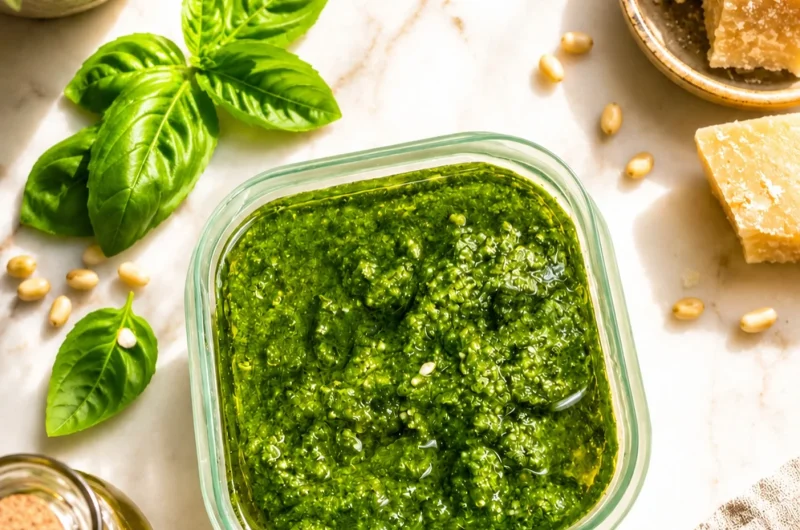
Easy Homemade Pesto Recipe Ready in 5 Minutes
6
servings5
minutes180
kcalA quick, nut-free basil pesto made in five minutes flat. Fresh basil, toasted seeds, garlic, and olive oil blend into a rich, versatile sauce perfect for pasta, sandwiches, or soup.
Ingredients
Ingredients:
2 cups fresh basil leaves, packed
1/2 cup extra virgin olive oil
1/2 cup grated Parmesan cheese
3 cloves garlic, peeled
1/4 cup sunflower seeds or pumpkin seeds (nut-free swap)
1/2 teaspoon salt
1/4 teaspoon black pepper
1 tablespoon lemon juice
Optional Add-ins:
2 tablespoons baby spinach
1/4 teaspoon red pepper flakes
1 tablespoon nutritional yeast
1 tablespoon toasted sesame seeds
1 teaspoon lemon zest
Directions
- Wash and dry the basil leaves thoroughly; remove thick stems.
- Peel the garlic cloves, halving them if you prefer a milder flavor.
- Toast the sunflower or pumpkin seeds in a dry skillet for 2–3 minutes until golden; let cool.
- Add basil, garlic, toasted seeds, salt, and pepper to a food processor; pulse to combine.
- With the motor running, slowly stream in the olive oil until emulsified.
- Scrape down the sides, add Parmesan and lemon juice, then pulse until just combined.
- Taste and adjust seasoning with more salt or lemon as needed.
- Transfer to a jar or bowl immediately and serve or store.
Recipe Video
Notes
- Press plastic wrap or a thin layer of olive oil on top before storing to prevent browning.
- Keeps refrigerated for up to 5 days.
- Freezes well in ice cube trays for up to 3 months.
- For a vegan version, omit Parmesan or replace with nutritional yeast.
- Pulse briefly for a rustic texture, or blend longer for a smooth sauce.