Butter chicken is one of those dishes that separates home cooks from home cooks who actually understand flavor. It isn’t complicated, but it is precise. Get the marinade right, get the gravy right, and you land somewhere very close to the version you order on a Friday night with extra naan.
Most disappointing homemade attempts skip the two things that actually matter: a proper yogurt marinade and a tomato base cooked down long enough to lose its raw edge. Skip either step, and you get a thin, tangy sauce instead of something deep, glossy, and rich.
This recipe uses pantry spices you likely already own, a splash of cream, and a final knob of butter that ties the whole sauce together. Nothing exotic, nothing that requires a special trip to a specialty grocer.
Serve it hot over steamed basmati rice with warm naan on the side. And if you end up with extra sauce, don’t waste it — toss it with pasta the next day for a genuinely excellent butter chicken pasta. This is restaurant-quality cooking, built entirely in your own kitchen.
Ingredients You’ll Need
Great butter chicken doesn’t hide behind a long ingredient list — it earns its flavor from a handful of everyday staples used the right way.
One of the things I love about this recipe is that it uses simple pantry ingredients. You probably already have most of them in your kitchen.
Base Ingredients
- 700 g boneless chicken thighs, cut into chunks
- 1/2 cup plain full-fat yogurt
- 2 tablespoons lemon juice
- 1 tablespoon ginger-garlic paste
- 1 teaspoon turmeric powder
- 2 teaspoons red chili powder
- 1 teaspoon garam masala
- 3 tablespoons butter, divided
- 1 tablespoon neutral oil
- 1 large onion, finely chopped
- 1 tablespoon ginger-garlic paste (for the gravy)
- 400 g canned crushed tomatoes
- 1 teaspoon ground cumin
- 1 teaspoon Kashmiri red chili powder
- 1/2 cup heavy cream
- 1 tablespoon honey or sugar
- Salt to taste
- Fresh cilantro, chopped, for garnish
Optional Add-ins
- 1 teaspoon kasuri methi (dried fenugreek leaves)
- 1/4 teaspoon smoked paprika
- 2 tablespoons cashew paste for extra richness
- 1/2 teaspoon ground cardamom
- 1 green chili, slit, for heat
Step-by-Step Instructions
Marinate the Chicken
Combine the chicken with yogurt, lemon juice, ginger-garlic paste, turmeric, chili powder, and garam masala in a bowl. Mix thoroughly so every piece is coated. Cover and refrigerate for at least one hour, though overnight delivers noticeably better flavor and texture. This step tenderizes the meat while infusing it with the base spice profile. Don’t rush this stage — it’s the foundation of everything that follows, and shortcuts here are the single biggest reason homemade versions taste flat compared to restaurant ones.
Sear the Chicken
Heat one tablespoon of butter with the oil in a large skillet over medium-high heat. Add the marinated chicken in a single layer, working in batches if needed to avoid crowding. Sear for three to four minutes per side until lightly charred but not fully cooked through. Remove and set aside. This quick sear builds a layer of smoky depth that plain simmering can’t replicate, and it keeps the chicken from turning rubbery later in the sauce.
Build the Gravy Base
In the same skillet, melt the remaining butter and sauté the chopped onion until soft and golden, about six to seven minutes. Stir in the ginger-garlic paste and cook for one minute until fragrant. Add the crushed tomatoes, cumin, and Kashmiri chili powder. Simmer uncovered for fifteen to twenty minutes, stirring occasionally, until the mixture thickens and the oil begins to separate slightly at the edges — this is the visual cue that the raw tomato taste is gone.
Blend for a Silky Texture
Let the tomato mixture cool slightly, then blend it until completely smooth using an immersion blender or a countertop blender. Return the sauce to the skillet over low heat. This step is what gives restaurant butter chicken its signature velvety consistency, rather than a chunky, rustic gravy. Strain through a fine sieve if you want an ultra-refined finish, though blending alone is typically sufficient for a smooth result.
Simmer With Chicken and Cream
Return the seared chicken to the skillet along with any accumulated juices. Simmer gently for eight to ten minutes until the chicken is fully cooked and tender. Stir in the heavy cream and honey, adjusting salt to taste. Crush the kasuri methi between your palms and add it now if using. Simmer for a final two minutes so the flavors meld completely before removing from heat.
Finish and Serve
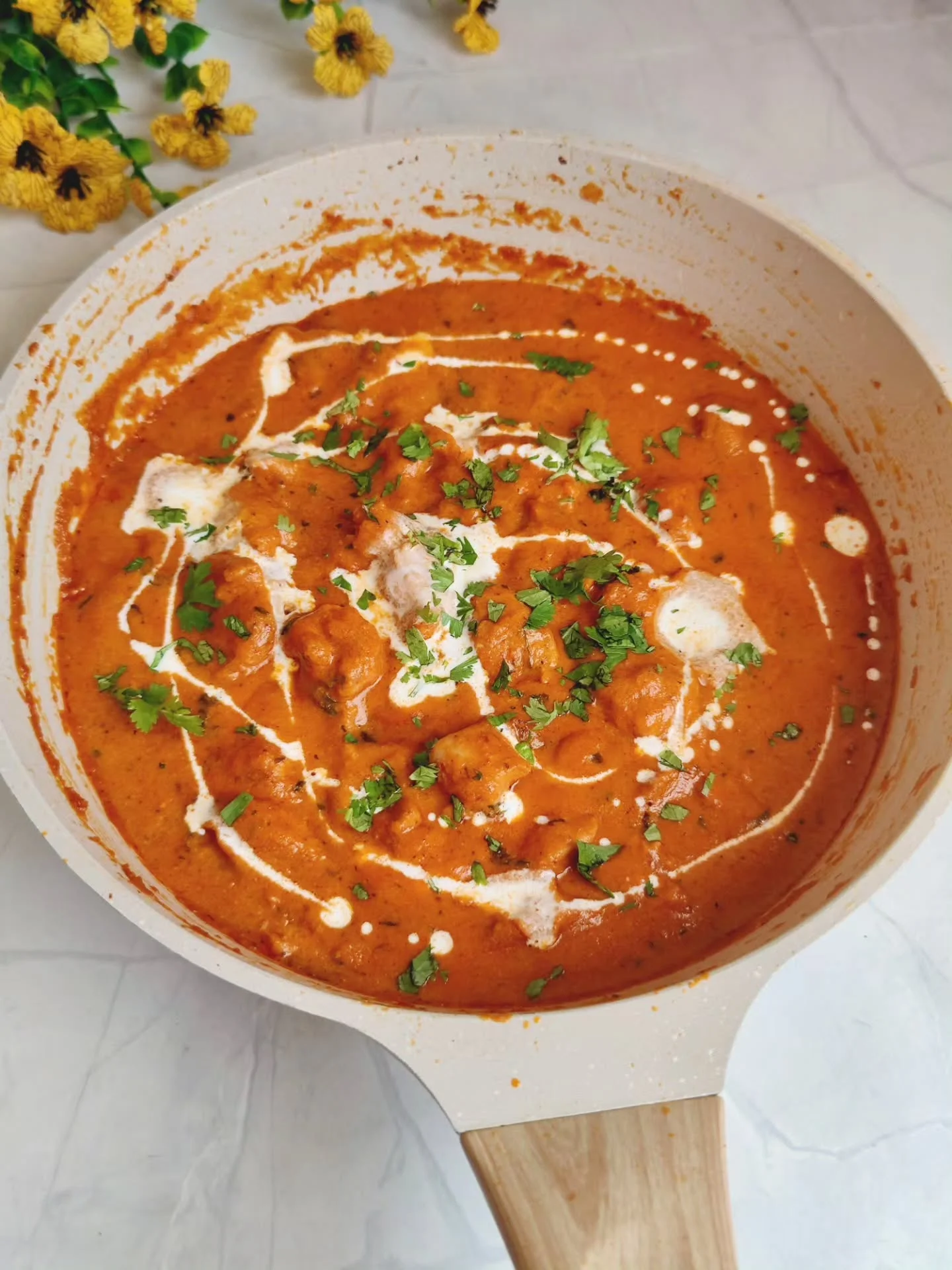
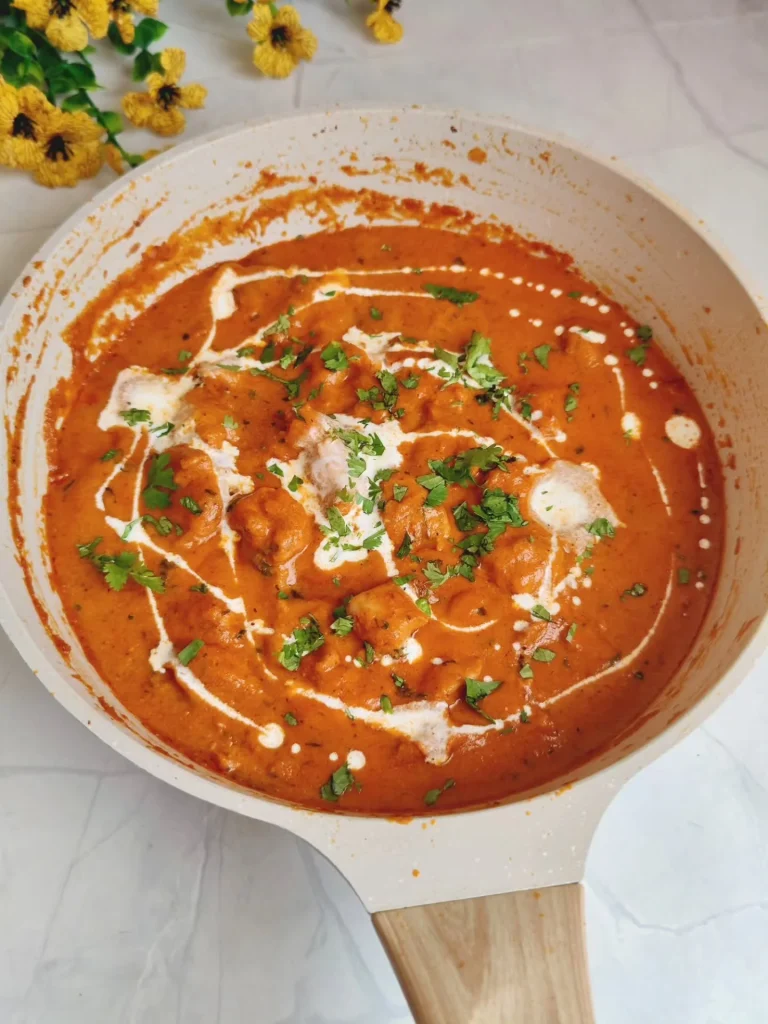
Swirl in a small extra knob of butter just before serving for glossy richness and a restaurant-style sheen. Garnish generously with fresh chopped cilantro. Serve immediately over steamed basmati rice or alongside warm garlic naan. The sauce should coat the back of a spoon without being heavy — rich, aromatic, and balanced between tangy, sweet, and smoky notes.
Cook Time
Total
1 hour 45 minutes (includes marinating time)
Prep
20 minutes
Bake
35 minutes stovetop cooking (no oven required)
Servings
This recipe makes approximately 4 to 5 generous servings, making it ideal for a family dinner or a small gathering where second helpings are practically guaranteed. Each portion pairs comfortably with a cup of steamed rice or two pieces of naan, so plan your sides accordingly if you’re feeding a larger table.
If you’re cooking for two, the leftovers store beautifully and taste even better the next day once the spices have had time to settle. For meal-prep purposes, this recipe also scales up cleanly — simply double the chicken and gravy quantities while keeping the spice ratios proportional.
Hosting a dinner party? This dish holds well in a warming dish for up to an hour, making it a stress-free centerpiece that lets you focus on the rest of the menu instead of hovering over the stove.
Common Mistakes in This Recipe
The most frequent mistake is skipping or rushing the marinade. Yogurt and acid need time to actually tenderize the chicken; a fifteen-minute marinade barely scratches the surface and leaves the meat tasting under-seasoned once cooked.
Another common issue is undercooking the tomato base. Many home cooks pull the sauce off the heat too early, leaving a sharp, acidic taste that no amount of cream can fully mask later in the process.
Overcrowding the pan during searing is a subtle but damaging mistake. Too much chicken at once causes steaming instead of browning, robbing the dish of the smoky depth that defines a proper butter chicken.
Finally, adding cream over high heat is a classic error. It can cause the sauce to split or curdle, leaving an unpleasant grainy texture instead of the smooth, glossy finish this dish is known for.
Solutions to Common Mistakes
Always marinate the chicken for a minimum of one hour, and ideally overnight in the refrigerator. This single adjustment dramatically improves both texture and flavor with almost no extra effort required.
To fix an underdeveloped tomato base, simmer it uncovered until you visibly see the oil separating at the edges of the pan. This is a reliable sign that the sourness has cooked out completely.
Sear chicken in batches rather than all at once, giving each piece enough space in the pan. A few extra minutes here pays off significantly in the final flavor of the dish.
When adding cream, always lower the heat first and stir it in gradually. Letting the sauce cool slightly before incorporating dairy prevents splitting and keeps the texture silky throughout.
Nutritional Information (approx. per serving)
- Calories: 420 kcal
- Protein: 32 g
- Fat: 27 g
- Carbohydrates: 11 g
- Fiber: 2 g
- Sodium: 480 mg
Butter chicken, despite its indulgent reputation, delivers a solid dose of protein from the chicken thighs, supporting muscle repair and keeping you fuller for longer between meals. This makes it a satisfying main course rather than an empty-calorie indulgence.
The tomato-based gravy contributes lycopene and vitamin C, both linked to immune support and skin health, while the ginger and garlic in the marinade offer natural anti-inflammatory compounds that many people overlook in richer dishes like this one.
Using yogurt in the marinade also introduces beneficial probiotics that support digestion, softening the overall richness of the meal with a genuine nutritional upside rather than just flavor.
Moderating the cream and butter, or swapping in lighter alternatives, allows you to enjoy the dish’s signature richness while keeping the fat content more aligned with everyday eating rather than reserving it strictly for special occasions.
Storage Instructions
Butter chicken stores exceptionally well, making it a strong candidate for meal prep or planned leftovers. Once cooled to room temperature, transfer it to an airtight container and refrigerate for up to four days without any noticeable drop in quality.
For longer storage, freeze the sauce and chicken together in a freezer-safe container for up to three months. Thaw overnight in the refrigerator rather than at room temperature to preserve texture and food safety.
When reheating, use low heat on the stovetop and stir frequently, adding a small splash of water or cream if the sauce has thickened too much during storage. Avoid high heat, which can cause the dairy to separate.
Microwave reheating works in a pinch, but stovetop reheating consistently produces a smoother, more restaurant-like texture, especially if you’re serving guests rather than eating leftovers solo.
Suggestions
Pair this dish with fluffy basmati rice or warm, pillowy naan to soak up every bit of the glossy sauce. Both are traditional accompaniments that complement the richness without competing with it.
For a lighter option, serve butter chicken over cauliflower rice or alongside a simple cucumber salad, which cuts through the richness with a refreshing, cooling contrast on the palate.
Leftover sauce is genuinely versatile — toss it with penne or fusilli the next day for an easy, crowd-pleasing butter chicken pasta that takes barely ten minutes to put together.
A side of sautéed spinach or roasted vegetables rounds out the plate nicely, adding color, fiber, and balance to what is otherwise a fairly rich, sauce-forward main course.
Seasonal Relevance
Butter chicken genuinely works year-round, but it shines brightest during cooler months when a warm, spiced, comforting dish feels most appropriate at the dinner table. Its richness suits autumn and winter gatherings particularly well.
During the colder season, the warming spices — cumin, garam masala, and chili — provide a natural sense of coziness that pairs beautifully with cold evenings and shorter days when comfort food is in higher demand.
That said, it also holds its own during summer entertaining, especially when balanced with lighter sides like cucumber raita or a citrus-forward salad to offset the dish’s richness in warmer weather.
Around the holidays, this recipe makes an excellent alternative centerpiece for guests seeking something outside the usual roast, offering bold flavor without requiring specialty ingredients or complicated techniques.
Final Words
Butter chicken rewards patience more than skill. The marinade, the slow-cooked tomato base, and the careful addition of cream are simple techniques that, done properly, produce something genuinely comparable to your favorite restaurant order.
This is a dish worth making on repeat, not just for special occasions. Once you’ve nailed the process, it becomes a reliable weeknight option that still feels special enough for guests.
Don’t be afraid to adjust the spice level, cream quantity, or sweetness to match your own preferences. The base method here is flexible enough to accommodate personal taste without compromising the final result.
Give this recipe the time it deserves, and you’ll likely find yourself skipping takeout menus in favor of your own kitchen — which, frankly, is the highest compliment a homemade dish like this can earn.
Frequently Asked Questions
Can I make butter chicken without cream?
Yes, you can substitute cashew paste blended with water, or use full-fat coconut milk for a dairy-free alternative. Both options maintain a rich, creamy texture while adjusting the flavor slightly, offering flexibility for different dietary needs without sacrificing the dish’s signature consistency.
Is butter chicken very spicy?
Not inherently. Traditional butter chicken is mild to moderately spiced, relying more on warmth and depth than heat. You can easily adjust chili quantities up or down, or add fresh green chilies, to match your personal spice tolerance precisely.
Can I use chicken breast instead of thighs?
Yes, though thighs are recommended for their tenderness and resistance to drying out. If using chicken breast, reduce cooking time slightly and monitor closely, since breast meat cooks faster and can become tough if left simmering too long.
Creamy Butter Chicken That Tastes Like Your Favorite Restaurant
4
servings20
minutes35
minutes420
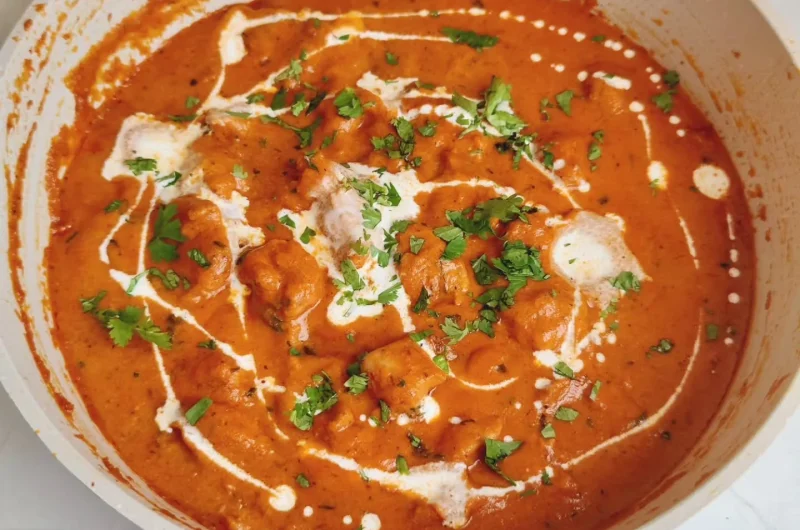
kcalRestaurant-style butter chicken made at home with a yogurt-marinated chicken, a silky slow-cooked tomato gravy, and a finishing touch of cream and butter for that signature rich, glossy texture.
Ingredients
For the Marinade:
700 g boneless chicken thighs, cut into chunks
1/2 cup plain full-fat yogurt
2 tablespoons lemon juice
1 tablespoon ginger-garlic paste
1 teaspoon turmeric powder
2 teaspoons red chili powder
1 teaspoon garam masala
For the Gravy:
3 tablespoons butter, divided
1 tablespoon neutral oil
1 large onion, finely chopped
1 tablespoon ginger-garlic paste
400 g canned crushed tomatoes
1 teaspoon ground cumin
1 teaspoon Kashmiri red chili powder
1/2 cup heavy cream
1 tablespoon honey or sugar
Salt to taste
Fresh cilantro, chopped, for garnish
Optional Add-ins:
1 teaspoon kasuri methi (dried fenugreek leaves)
1/4 teaspoon smoked paprika
2 tablespoons cashew paste
1/2 teaspoon ground cardamom
1 green chili, slit
Directions
- Marinate chicken in yogurt, lemon juice, ginger-garlic paste, turmeric, chili powder, and garam masala. Refrigerate 1 hour to overnight.
- Sear marinated chicken in butter and oil, 3-4 minutes per side, in batches. Set aside.
- Sauté onion until golden, then add ginger-garlic paste and cook 1 minute.
- Add crushed tomatoes, cumin, and Kashmiri chili powder. Simmer uncovered 15-20 minutes until thickened.
- Cool slightly and blend the tomato mixture until smooth. Return to skillet.
- Add seared chicken back to the pan and simmer 8-10 minutes until fully cooked.
- Stir in heavy cream, honey, and kasuri methi. Simmer 2 more minutes.
- Finish with a knob of butter and fresh cilantro. Serve hot with rice or naan.
Recipe Video
Notes
- Marinate overnight for the best flavor and tenderness.
- Simmer the tomato base until oil separates at the edges for a fully cooked taste.
- Lower heat before adding cream to prevent splitting.
- Leftover sauce works great tossed with pasta the next day.
- Store in an airtight container in the fridge for up to 4 days, or freeze for up to 3 months.