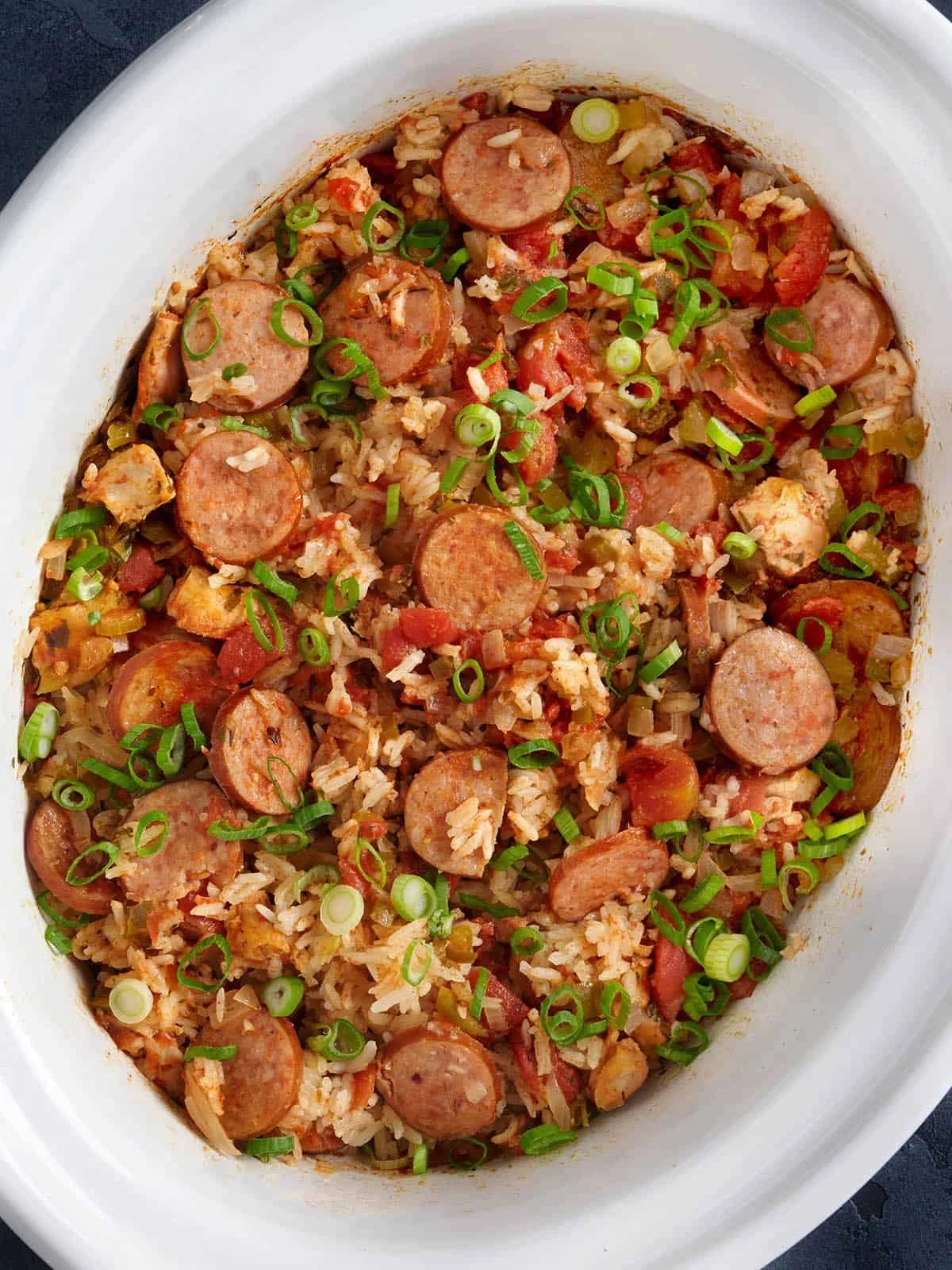
Jambalaya is one of those dishes that tells you exactly what kind of cook you are the moment you start browning the sausage. Rush it, and you get a pale, watery pot of rice. Respect the process, and you get something deeply savory, smoky, and layered with real Louisiana character.
This version leans Cajun rather than Creole, which means no tomatoes. Instead, the rice pulls its color and depth from a well-caramelized trinity of onion, celery, and bell pepper, plus a generous amount of andouille sausage rendered until the fond builds up on the bottom of the pot.
Everything happens in a single pot, which is part of the appeal. Once the rice goes in, the hardest part of the entire recipe is resisting the urge to stir. Cajun jambalaya wants to steam undisturbed, absorbing broth and building a slight crust along the bottom.
If you want a seafood spin, shrimp goes in during the final few minutes, just long enough to turn pink and tender. This is weeknight-friendly, freezer-friendly, and forgiving enough for a first attempt, yet impressive enough to serve guests.
Ingredients You’ll Need
Great jambalaya doesn’t hide behind fancy ingredients — it earns its flavor from technique, patience, and a handful of staples doing serious work together.
Base Ingredients
- 1 tablespoon vegetable oil
- 1 pound andouille sausage, sliced into rounds
- 1 pound boneless chicken thighs, cut into bite-sized pieces
- 1 medium yellow onion, diced
- 1 green bell pepper, diced
- 2 celery stalks, diced
- 4 garlic cloves, minced
- 2 tablespoons Cajun seasoning
- 1 teaspoon smoked paprika
- 1/2 teaspoon cayenne pepper
- 1 bay leaf
- 2 cups long-grain white rice
- 3 1/2 cups chicken broth
- 2 green onions, sliced, for garnish
- Salt, to taste
Optional Add-ins
- 1 pound shrimp, peeled and deveined
- 1/2 cup diced ham
- 1 teaspoon Worcestershire sauce
- 1/4 teaspoon dried thyme
- 1 tablespoon fresh parsley, chopped
- 1 dash hot sauce
Step-by-Step Instructions
Brown the Sausage and Chicken
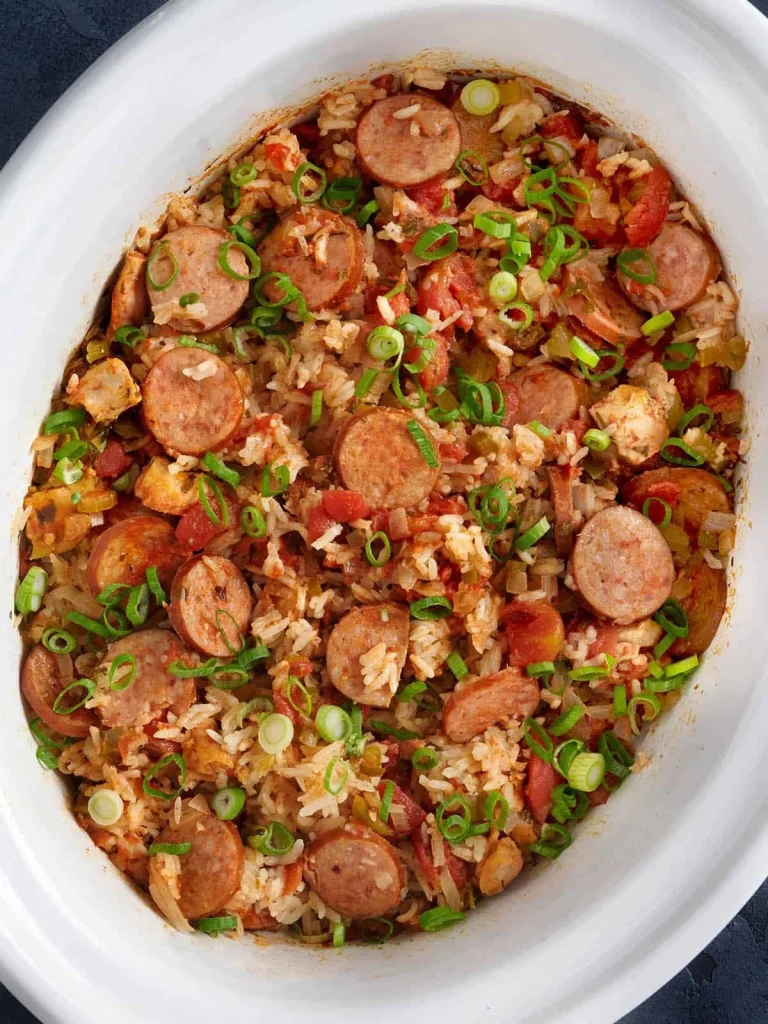
Heat the oil in a large, heavy-bottomed pot or Dutch oven over medium-high heat. Add the andouille sausage first and let it brown deeply, about 4 minutes, releasing its smoky fat into the pot. Add the chicken pieces and cook until golden on all sides, roughly 5 to 6 minutes. Don’t rush this stage. The browned bits left behind form the flavor foundation for the entire dish, so resist stirring too often and let real color develop before moving on.
Build the Trinity
Remove the meat and set it aside. In the same pot, add the onion, bell pepper, and celery, stirring to scrape up the browned bits. Cook for 6 to 8 minutes until softened and lightly caramelized at the edges. Stir in the garlic during the last minute so it doesn’t scorch. This vegetable base, known as the trinity, is the backbone of Cajun cooking and replaces the tomato base found in Creole-style jambalaya, giving the dish its signature earthy color.
Season and Deglaze
Return the sausage and chicken to the pot. Sprinkle in the Cajun seasoning, smoked paprika, cayenne, and bay leaf, stirring so the spices toast slightly and bloom in the residual fat. Pour in the chicken broth, scraping the bottom of the pot thoroughly to lift every browned fragment. This deglazing step matters more than it seems, since those caramelized bits carry concentrated flavor that would otherwise be wasted at the bottom of the pan.
Add Rice and Steam Undisturbed
Stir in the rice once, making sure it’s evenly distributed and fully submerged in the liquid. Bring everything to a boil, then immediately reduce the heat to low and cover tightly. From this point forward, do not lift the lid or stir. Let it steam undisturbed for 20 to 25 minutes. Stirring releases starch and steam, leading to gummy, unevenly cooked rice instead of distinct, tender grains.
Finish with Shrimp and Rest
If making the seafood version, nestle the shrimp on top during the final 5 minutes of cooking, then re-cover the pot so they steam through gently. Once the rice is tender and liquid is absorbed, remove the pot from heat and let it rest, covered, for 5 minutes. Fluff with a fork, discard the bay leaf, and garnish with sliced green onions before serving hot.
Cook Time
Total: 55 minutes
Prep: 15 minutes
Bake: Not applicable (stovetop only)
Servings
This recipe makes approximately 6 generous servings, making it well suited for a family dinner or a casual gathering with friends. Each portion lands around 1.5 cups, hearty enough to stand on its own without needing a side dish, though crusty bread or a simple green salad rounds out the meal nicely.
Because jambalaya is a rice-based dish, it also stretches further than most protein-forward mains, which makes it a smart choice for feeding a crowd without inflating your grocery bill. Leftovers reheat well, so don’t hesitate to make the full batch even for a smaller household.
If you’re scaling this recipe up for a party, the ratios hold steady as long as you keep your pot large enough for even steaming. Doubling the recipe in a pot that’s too shallow will result in unevenly cooked rice near the edges.
Common Mistakes in This Recipe
The single most common mistake is stirring the rice while it steams. It feels counterintuitive to leave a pot alone, but every lift of the lid releases steam the rice needs to cook evenly, resulting in a crunchy, undercooked center or a mushy top layer.
Another frequent misstep is rushing the browning stage. Cooks often toss the sausage and chicken in together and pull them out too early, missing the deep caramelization that gives Cajun jambalaya its signature color and smokiness rather than a pale, flat flavor profile.
Overcrowding the pot with too much liquid is another issue home cooks run into, especially when doubling the recipe without adjusting pot size, which leaves rice swimming instead of steaming and results in a soupy, unstructured texture.
Finally, adding shrimp too early causes rubbery, overcooked seafood. Shrimp needs only a few minutes of gentle steam, and tossing it in alongside the chicken guarantees it turns tough long before the rice finishes cooking through.
Solutions to Common Mistakes
To avoid gummy rice, commit to the undisturbed steaming method fully. Set a timer, walk away from the stove, and trust the process. If you’re worried about sticking, a heavy-bottomed pot with a tight-fitting lid solves that concern far better than compulsive stirring ever could.
For deeper flavor, sear the sausage and chicken in batches if needed, giving each piece enough space to brown rather than steam. A few extra minutes here pays off significantly in the final dish’s color and smokiness.
If liquid ratios feel off, measure broth precisely rather than eyeballing it, and use a wider pot when doubling quantities so the rice layer stays thin enough to steam evenly throughout.
For seafood versions, add shrimp only in the final five minutes, then re-cover immediately so residual steam finishes the job gently without turning the texture tough or chewy.
Nutritional Information (approx. per serving)
- Calories: 420
- Protein: 28g
- Carbohydrates: 42g
- Fat: 15g
- Fiber: 2g
- Sodium: 780mg
Beyond its bold flavor, jambalaya offers a solid protein punch thanks to the combination of chicken, sausage, and optional shrimp, which supports muscle maintenance and helps keep you satisfied for longer between meals. The vegetable trinity contributes fiber, vitamin C, and antioxidants, adding nutritional balance to what might otherwise be a heavier, meat-forward dish.
Using long-grain rice provides a steady source of energy without the density of richer starches like pasta, making this dish a reasonably balanced one-pot meal when portioned thoughtfully. Swapping in leaner chicken breast or reducing sausage quantity can lighten the dish further for those watching saturated fat intake.
Garlic and Cajun spice blends, often containing paprika and cayenne, bring modest anti-inflammatory and metabolism-supporting properties as well. None of this turns jambalaya into health food, but it does mean you’re getting genuine nutritional value alongside the comfort-food satisfaction.
Storage Instructions
Leftover jambalaya keeps well in an airtight container in the refrigerator for up to 4 days, and the flavor often deepens slightly by the second day as the spices continue to meld into the rice.
For longer storage, freeze portions in freezer-safe containers or heavy-duty bags for up to 3 months. It’s worth noting that shrimp doesn’t freeze and reheat quite as gracefully as chicken and sausage, so consider leaving it out if you’re freezing a batch specifically for later.
When reheating, add a splash of chicken broth or water to loosen the rice, which tends to firm up in the fridge. A covered skillet over medium-low heat works better than a microwave for restoring texture without drying it out.
Avoid leaving jambalaya at room temperature for more than two hours after cooking, since rice-based dishes are particularly susceptible to bacterial growth if left unrefrigerated too long.
Suggestions
Serve jambalaya with a wedge of lemon on the side; a quick squeeze right before eating brightens the smoky, spiced flavors in a way that’s easy to overlook until you try it.
Crusty French bread or cornbread makes an excellent companion, perfect for soaking up any extra broth left at the bottom of the bowl once the rice is gone.
For heat lovers, keep a bottle of hot sauce on the table rather than adding more cayenne to the pot itself, since it lets each person adjust spice level without altering the dish for everyone else.
A simple side salad with a sharp vinaigrette provides welcome acidity and freshness alongside jambalaya’s rich, savory profile, balancing out the meal without competing with its bold Cajun character.
Seasonal Relevance
Jambalaya is a natural fit for cooler months, when a hearty, spice-forward one-pot meal feels especially satisfying after a long day, and its make-ahead nature suits busy autumn and winter schedules well.
That said, it also earns a spot at warm-weather gatherings, particularly Mardi Gras celebrations and summer cookouts, where its bold flavor and shareable format make it a natural centerpiece for a crowd.
Shrimp jambalaya, in particular, feels right at home during spring and summer when fresh seafood is more readily available and appetites lean toward lighter, brighter proteins compared to heavier winter fare.
Because the ingredients are largely pantry staples, this dish also works well any time of year, regardless of season, making it a reliable go-to whenever you want big flavor without much planning.
Final Words
Jambalaya rewards patience more than precision. Once you understand the rhythm of browning, building, and steaming undisturbed, the recipe becomes second nature, and small variations in what’s in your fridge stop feeling like risks and start feeling like opportunities.
This Cajun-style version, built without tomatoes, leans into deep caramelization and bold spice rather than acidity, giving it a heartier, smokier profile that pairs beautifully with andouille sausage and, when you want it, tender shrimp.
Whether you’re cooking for a weeknight dinner or a larger gathering, this one-pot approach keeps cleanup minimal while still delivering a dish that tastes like it took far more effort than it actually did.
Give it the time it asks for, especially during that undisturbed steaming stage, and you’ll end up with a pot of jambalaya that tastes like it came straight from a Louisiana kitchen.
Frequently Asked Questions
Can I make this recipe with brown rice instead of white rice?
Yes, but brown rice needs more liquid and a longer cooking time, roughly 40 to 45 minutes covered. Increase the broth by about half a cup and check doneness before assuming it’s finished, since texture can vary by brand.
Is jambalaya naturally gluten-free?
Generally yes, since rice, meat, and vegetables contain no gluten. Just double-check your Cajun seasoning blend and andouille sausage labels, as some commercial brands add fillers or anti-caking agents that occasionally contain gluten.
Why did my jambalaya turn out mushy instead of fluffy?
Mushy texture usually comes from too much liquid, stirring during the steaming phase, or overcooking. Measure broth precisely, keep the lid on undisturbed, and pull the pot off heat as soon as the rice is tender.
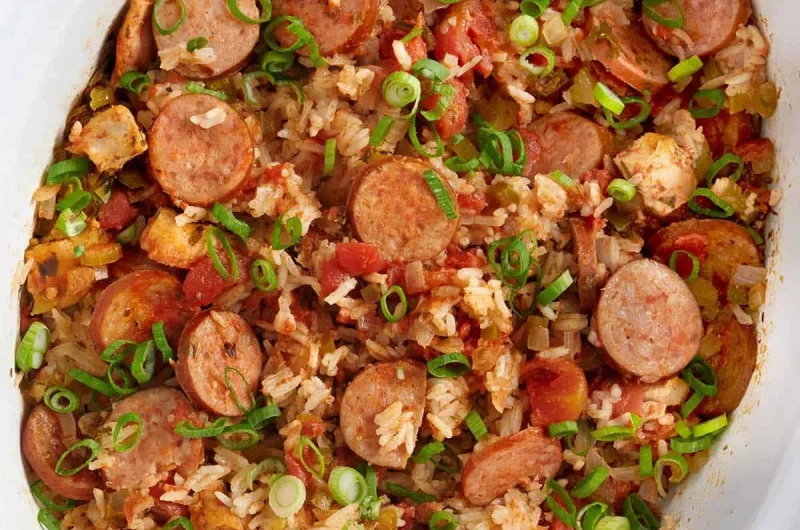
Easy One-Pot Jambalaya with Classic Cajun Flavor
6
servings15
minutes40
minutes420
kcalA smoky, spice-packed Cajun jambalaya made in one pot with andouille sausage, chicken, and the classic trinity. No tomatoes here — just deeply caramelized flavor and perfectly steamed rice. Add shrimp for a seafood twist.
Ingredients
1 tablespoon vegetable oil
1 pound andouille sausage, sliced into rounds
1 pound boneless chicken thighs, cut into bite-sized pieces
1 medium yellow onion, diced
1 green bell pepper, diced
2 celery stalks, diced
4 garlic cloves, minced
2 tablespoons Cajun seasoning
1 teaspoon smoked paprika
1/2 teaspoon cayenne pepper
1 bay leaf
2 cups long-grain white rice
3 1/2 cups chicken broth
2 green onions, sliced, for garnish
Salt, to taste
1 pound shrimp, peeled and deveined (optional)
1/2 cup diced ham (optional)
1 teaspoon Worcestershire sauce (optional)
1/4 teaspoon dried thyme (optional)
1 tablespoon fresh parsley, chopped (optional)
1 dash hot sauce (optional)
Directions
- Heat oil in a large pot over medium-high heat. Brown the andouille sausage for 4 minutes, then add chicken and cook until golden, 5 to 6 minutes. Remove and set aside.
- In the same pot, cook onion, bell pepper, and celery for 6 to 8 minutes until softened. Add garlic during the last minute.
- Return sausage and chicken to the pot. Stir in Cajun seasoning, smoked paprika, cayenne, and bay leaf until fragrant.
- Pour in chicken broth, scraping up any browned bits from the bottom of the pot.
- Stir in rice once, ensuring it’s fully submerged. Bring to a boil, then reduce heat to low and cover tightly.
- Let steam undisturbed for 20 to 25 minutes without lifting the lid or stirring.
- For seafood jambalaya, add shrimp on top during the final 5 minutes, then re-cover to steam through.
- Remove from heat, let rest covered for 5 minutes, fluff with a fork, discard bay leaf, and garnish with green onions.
Recipe Video
Notes
- Do not stir the rice while it steams — this prevents gummy or unevenly cooked texture.
- Use a heavy-bottomed pot with a tight-fitting lid for the best results.
- Leftovers keep in the fridge for up to 4 days or in the freezer for up to 3 months (best without shrimp if freezing).
- Add a splash of broth when reheating to loosen the rice.